
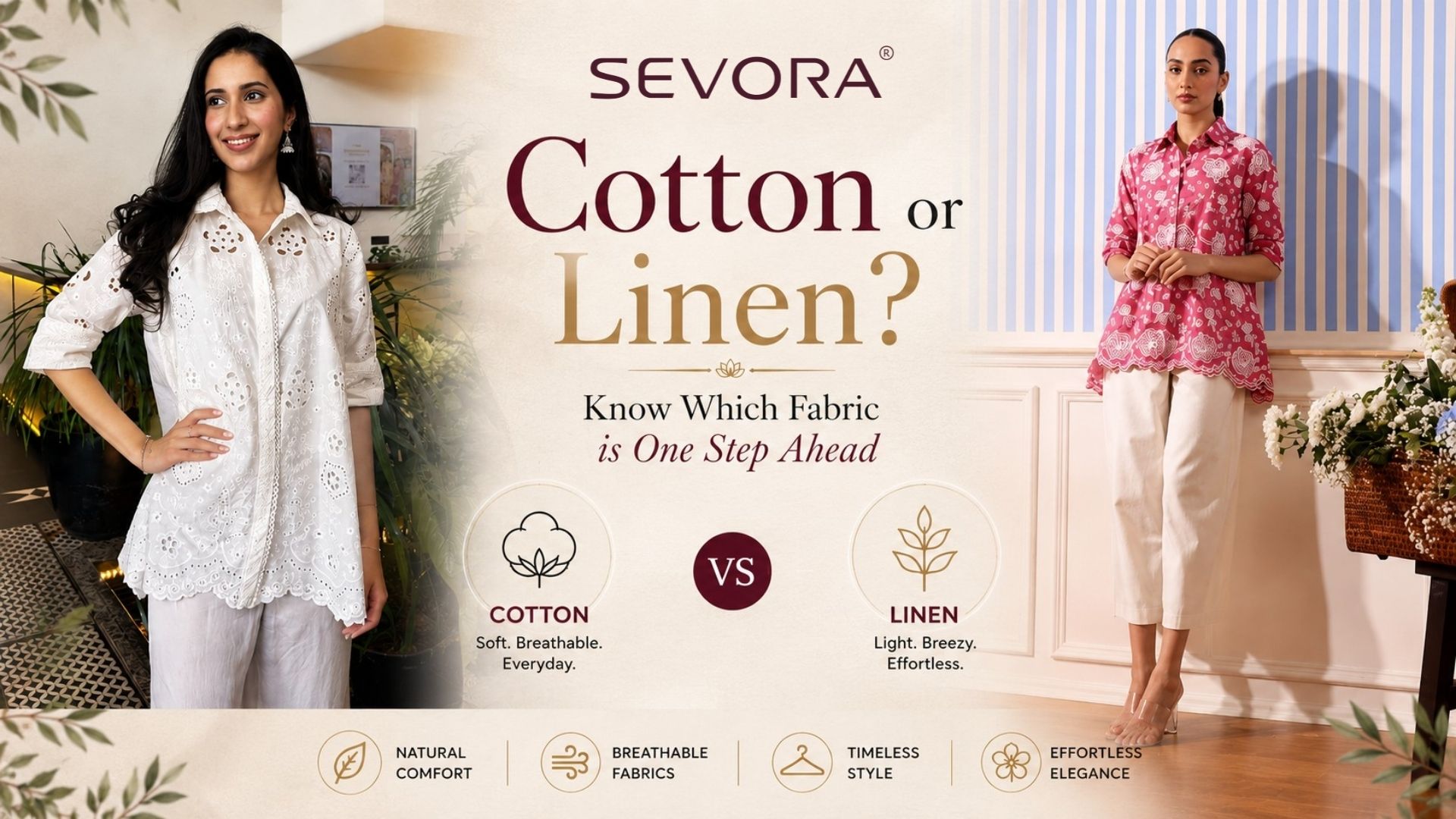
Cotton or Linen? – Know Which Fabric is one Step Ahead
Whenever the topic of clothing appeared, debate on fabrics joined naturally. ‘Linen fabric vs cotton’ is the most popular one among them. They are the best of both worlds, then what exactly makes them different? That’s what today’s article is going to unleash. From knowing their nature to their specialty and weakness, read till the end of this blog to find out which one is closer to buyers.
Selecting Fabrics? — Right Choice Really Matters
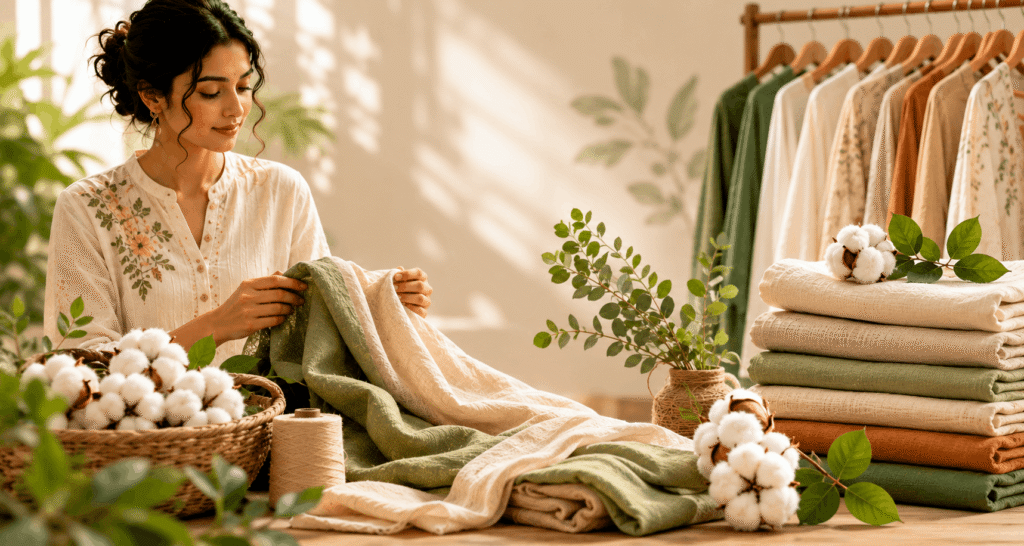
Fabric identification doesn’t only point out the outer look but a lot more. While purchasing clothes, people get attracted to colours & designs first. But what they mostly skip is the fabric. Fabric decides the lifeline of a clothing piece. In a generation filled with abundant fashion, your choice of dress material makes all the difference. Here’s why:
- Fabric for Comfort
When you try a dress, the first thing you pay attention to is how comfortable you’re feeling in that outfit, right? That comfort comes from the fabric. It’s the origin of breathability. Cotton, linen, and bamboo silk are ideal examples.
- Sensitive Skin
Wrong choice in fabrics really affects people with skin sensitivity. For them, natural fabrics are effective. Take pure cotton for instance, it prevents irritation unlike synthetic fibres that cause skin rashes and itchiness.
- Flexibility
Light fabrics allow flexible body movements for daily activities. So, it’s very important to know which fabrics can work against them in climate change and your personal preferences.
- Durable or not?
The lifeline of a dress completely depends on the fabric’s nature. Though natural fibres are often durable, taking proper care maintains that durability. Polyester or nylon fabrics are wrinkle-resistant and tearless but temporary with constant washing.
- Quality Says it All
Higher thread counts, denser weaves, and better-quality fibres resist pilling, tearing, and fading. Investing in garments made from high-grade fabrics can extend their usable life for years.
- Sustainability – A Healthy Fashion
Eco-friendly materials (cotton, tencel, hemp) are possible to recycle. Recycled clothes are harmless to a green planet unlike synthetics. Selecting them in your wardrobe means supporting a healthy fashion. Keeping these things in mind you get the most from every piece.
About Linen
The origin of linen fibre is a flax plant. Creating fabric from it involves the harvesting process, then retting, drying, and finally weaving the fibres. This fabric is very popular due to its durability features, along with comforting and moisture-soaking properties. That’s why it is mostly used in dresses, bedding, and towels. Linen is the first choice among shoppers to survive hot & humid climates as well.
What is Cotton?
Cotton comes from the fluffy balls of the cotton plant. The produced fibres from this plant are spun into yarn that’s woven into fabric. With its highly versatile, soft, and breathable nature, cotton is the most demanding fabric in fashion and home textiles. Cotton sheets offer a comfort match like no other. They are very soft and easy to take care of. They are also used in reusable diapers for their softness & hypoallergenic properties.
What Makes Them Compared to Each Other?
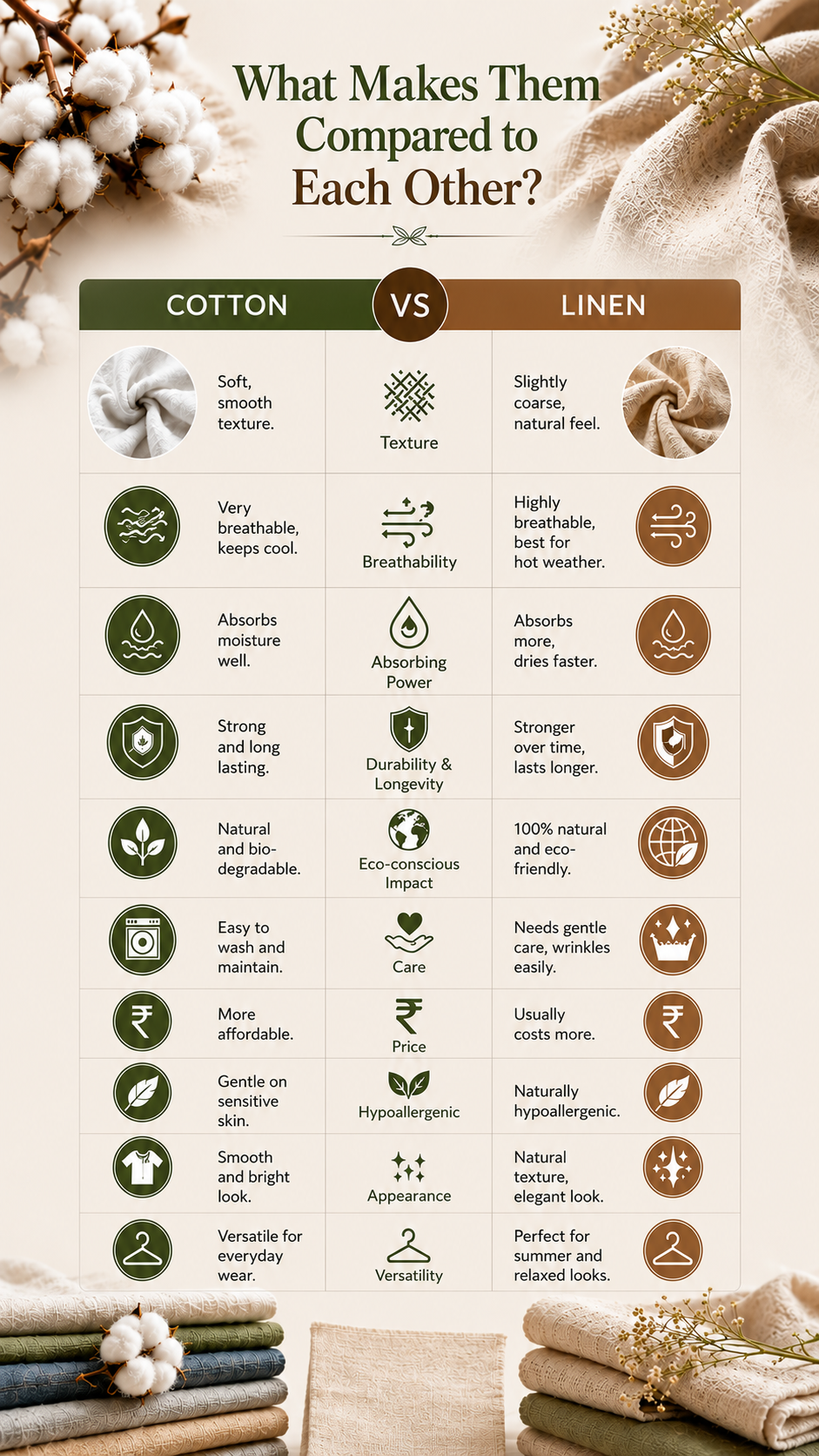
- Texture: One of the cotton fabric benefits are, their smoothness. The bedsheets made of this fabric last upto 5 years, but the linen ones get softer after washing them a few times and last upto 30 years.
- Breathability: Both are breathable fabrics, but the cotton clothing depend more on the weaves than fibres. For example, denims have thick cotton weaves for which they are not easily breathable. On the other hand, air can easily be circulated in linen fabric. Both fabrics are summer-friendly, but linen is proven to be the best in summer.
- Absorbing Power: Both fabrics are absorbent to water, but cotton leans more towards that quality as it has the ability to absorb over 25% water while linens hold 20% of water. Cotton wicks moisture as well, but not as linen has.
- Durability & Longevity: When it comes to fabric durability comparison, Linen is stronger than cotton. They can last for years if you take proper care. With time, they get softer and more comfortable.
In matter of longevity, several washes degrade cotton while linen still holds its strength. Purchasing linen clothes guarantees long-lasting charm to your wardrobe.
- Eco-conscious Impact: Linen fabric benefits require less water and pesticides to grow. So, it’s more sustainable in cotton vs linen comparison. To reduce carbon footprint, embracing linen is a wise decision.
- Care: Linen needs gentle care unlike other fabrics. Cotton is easier to maintain with machine wash without much concern. Both fabrics have their own nature with benefits.
- Price: If you wonder which fabric costs more, then linen is the answer. Cotton is less expensive compared to linen due to less expenditure in its production. Keeping durability and beneficial properties in mind, the price of linen can increase. Cotton is more affordable and easily available in the market.
- Hypoallergenic: Because Linen is a natural fibre, it is hypoallergenic and gentle with skin-sensitivity. If comfortable bedding is a question to the table, then choosing this fabric will reduce the possibilities of skin-irritation. Though, cotton is hypoallergenic as well, some treated cottons can’t guarantee the same protection.
- Appearance: In the debate of ‘which fabric styles better’, linen wins for its textured elegance. Being a smooth fabric, cotton is more for a clean & versatile look. Both fabrics are high in demand for bringing out the style icon in you. While picking materials for kurta sets, dresses, lehenga for women, or more, both offer attractive options.
- Versatility: Both of them are highly versatile. Linen is dear to summer style, its natural texture is ideal for various usage. But cotton is a go-to for everything from daily wear to formals.
Linen: Time To Explore The Types
1. Damask Linen
Damask linen is a premium piece of fabric, famous for attractive patterns and rich texture. They’re mostly used for luxury tablecloths and napkins. It is not only durable but attached to lustrous finish to provide stunning look.
2. Sheeting Linen
A high-quality material used for making bed sheets and pillowcases. Looking forward to a luxurious and comfortable sleeping experience? Rely on Sheeting Linen with eyes closed.
3. Loosely Woven Linen
Light in weight and breathable one. You can expect excellent airflow while wearing this linen clothing, due to its open weaves, which eventually makes it a friend of casual wear in summer. This type of linen is extremely soft and comfortable.
Know The Types of Cotton
1. Poplin Cotton
A type of cotton made with natural fibres, is durable and strongly woven material that contains smooth surface with crisp texture. Its use in making shirts & dress is very common. It offers a comfortable fit and effortless maintenance, reasons why they highly exist in casual wear.
2. Satin Cotton
A very expensive dress material known for giving smooth & soft feel, with a glossy end. The fabric is a blend of cottony comfort and shiny appearance, which is perfect not only for adding a rich texture to any home decor but also slaying a formal day.
3. Muslin Cotton
Being a loose woven fabric by nature fibres, it belongs to a very lightweight characteristic. Truly ideal for clothes, curtains, or summer wear due to its soft & breathable quality. The easiest cotton to dye and embrace in hot climates.
Conclusion
In the end of this guide on natural fabrics, it is safe to say that both Linen and cotton are great for fashion and textile purpose, but it’s their characteristics, benefits, and weakness that differentiate them. Once you learn to set them apart by the mentioned points above, you can make wise decisions while purchasing clothes belong to one of the fabrics.
But linen has the major vote over cotton. They’re one step ahead with durability, cosiness, sustainability, and fashion compared to cotton. Sevora makes sure that every linen products are curated with 100% natural love & toxin-free.
So, what wait? Go ahead and get yourself some linen products from Sevora today. We hope this article is helpful enough to let you know about the key differences between linen and cotton.
FAQs – Linen or Cotton?
A. Linen is better for summer heats because they are comfortable and more durable. But if you’re looking for something softer and versatile, then choosing cotton isn’t a bad decision. It depends on your choice, use, and personal requirements. Both fabrics are unique with different benefits.
A. No, 100% cotton and 100% linen aren’t the same concept. Cotton is soft and smooth but linen lasts longer. Each one has their own natural properties that make them suitable for different uses.
A. Well, choosing it over cotton means investing in durability, breathability, and sustainability. It’s the ideal fabric for summer and gets softer every time you wash it. Being sustainable, it takes less water and chemical.
A. Usually, premium linen doesn’t cause itchiness. However, new linen may feel slightly scratchy. But this stiffness starts fading with every wash, which means proper care is needed to keep it itchy-free.
A. Yes, linen is more expensive than cotton, based on how these fabrics are made, where they come from, and their overall durable characteristic.
A. Both cotton and linen are suitable for ethnic style, but the ‘best’ one must be decided on your personal style requirements. Linen is best for staying cool in hot climate while hugging premium fashion, whereas cotton is more for all-day comfort and ethnic prints.
A. Yes, they do. It happens because linen fibres are less elastic than cotton. So, when they’re bent, it easily breaks or creases. Cotton has a natural spring to hold their shape & prevent the crease.
A. To answer this, Linen is more preferred in sustainable fabric choices. For its less requirement of water and chemicals, they are stronger than cotton, making it age better.
A. You can find out by touching and looking at the fabrics. Linen has a rough texture and wrinkles easily. Cotton is more smooth & soft with less wrinkling feature, which is suitable for multiple use.
Related Articles
Enjoy This Article?
Subscribe to our newsletter for more fashion insights and exclusive content.
Subscribe Now