
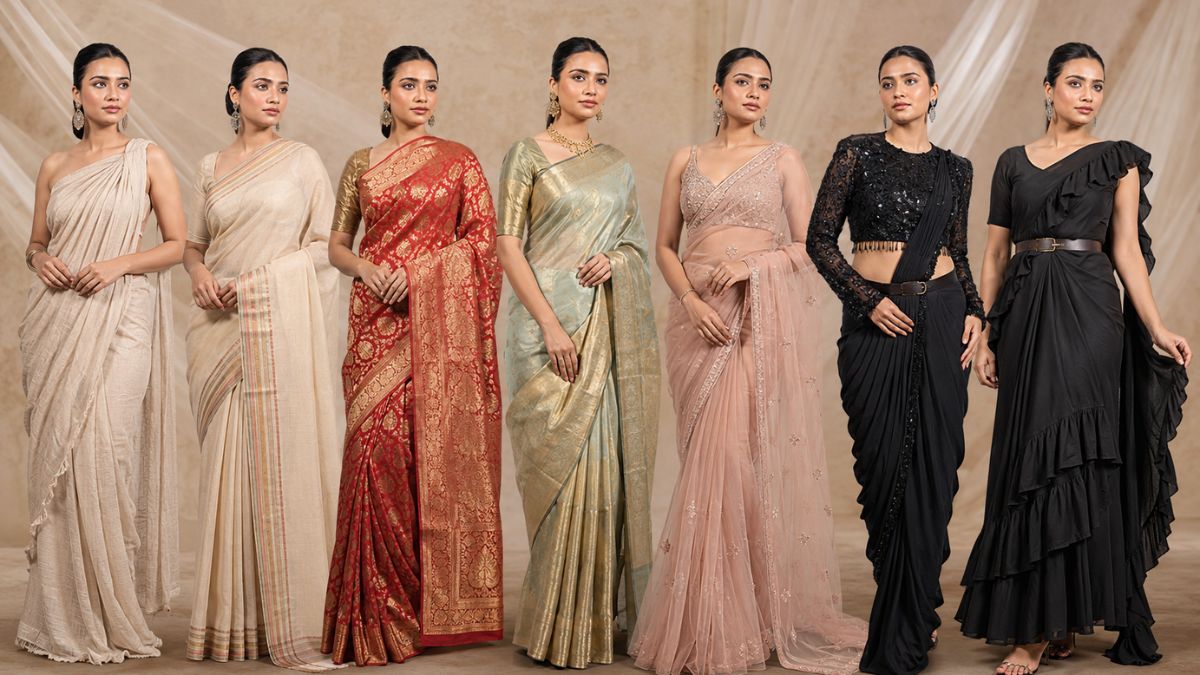
The Evolution of Sarees: From Tradition to Modern Trends
When we say or hear the word ‘saree’; Indian culture, heritage, and femininity eventually fill our vision. A piece of fabric that’s worn by millions of women across generations, has been globally symbolized as one of the most evergreen garments. In a world where trends keep coming and going back, saree styles continue to evolve while being grounded to its roots.
This Indian attire travelled from ancient civilizations to today’s extraordinary fashion runways. The entire journey reflects the country’s cultural lookbook, exceptional craftsmanship, and transformed social picture.
Being familiar with the evolution of sarees, gets you valuable insight into how this elegant invention turned into a global language of grace and classic.
Ancient Roots: Birth of Saree
The story of saree starts over 5,000 years ago, with several mentions in ancient and sacred scriptures like ‘Rig Veda’. The word ‘Saree’ was derived from the term ‘sattika’, which was used in Buddhist and Jain texts. They described the draped attire worn by women back in early civilization.
- Indus Valley Civilization (2800–1800 BCE): Archaeological reports indicate that women belong to that period, used to wear draped clothes like sarees. Those garments were made of cotton and simple fabrics.
- Vedic Period (1500–500 BCE): Clothing from this era were very useful and climate-friendly. Unstitched clothes were not gender specific; they were used by both men & women. It was because stitching technology was still not introduced that time.
- Gupta Empire (320–550 CE): This is when sarees start to be designed. With borders and intimate patterns, handlooms made an identity of itself. Gold and silk embroideries really bloomed during this period.
These early versions of sarees built the base for various region-friendly styles that was forwarded to upcoming centuries.
Regional Diversity: A Geographical Handloom
India has changed a lot in past few years. The geographical impact has inspired handloom to spread across different regions in India. Each distinct style & named a saree after them. Their weaving process and drape work introduced the culture & craftmanship of that regional area.
North India
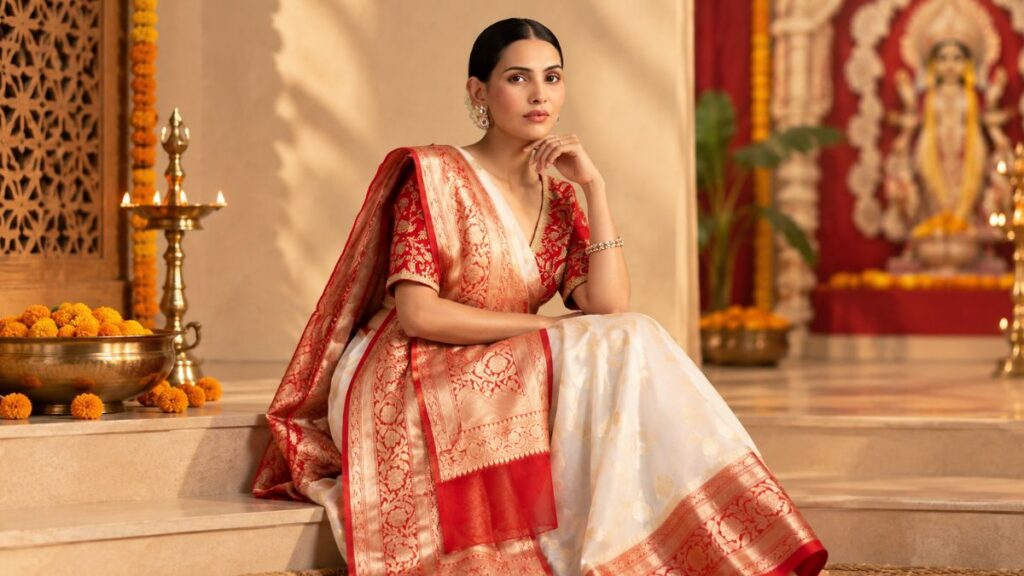
- Banarasi Silk (Uttar Pradesh): Oh my god, banarasi sarees have a huge fan following for its heavy Zari designs and Mughal-inspired floral motifs. It’s one of the most stable handlooms at weddings and festive occasions to date.
- Chikankari Sarees (Lucknow): Lightweight ethnic with hand embroidery. Considered to be the perfect example of summer wear.
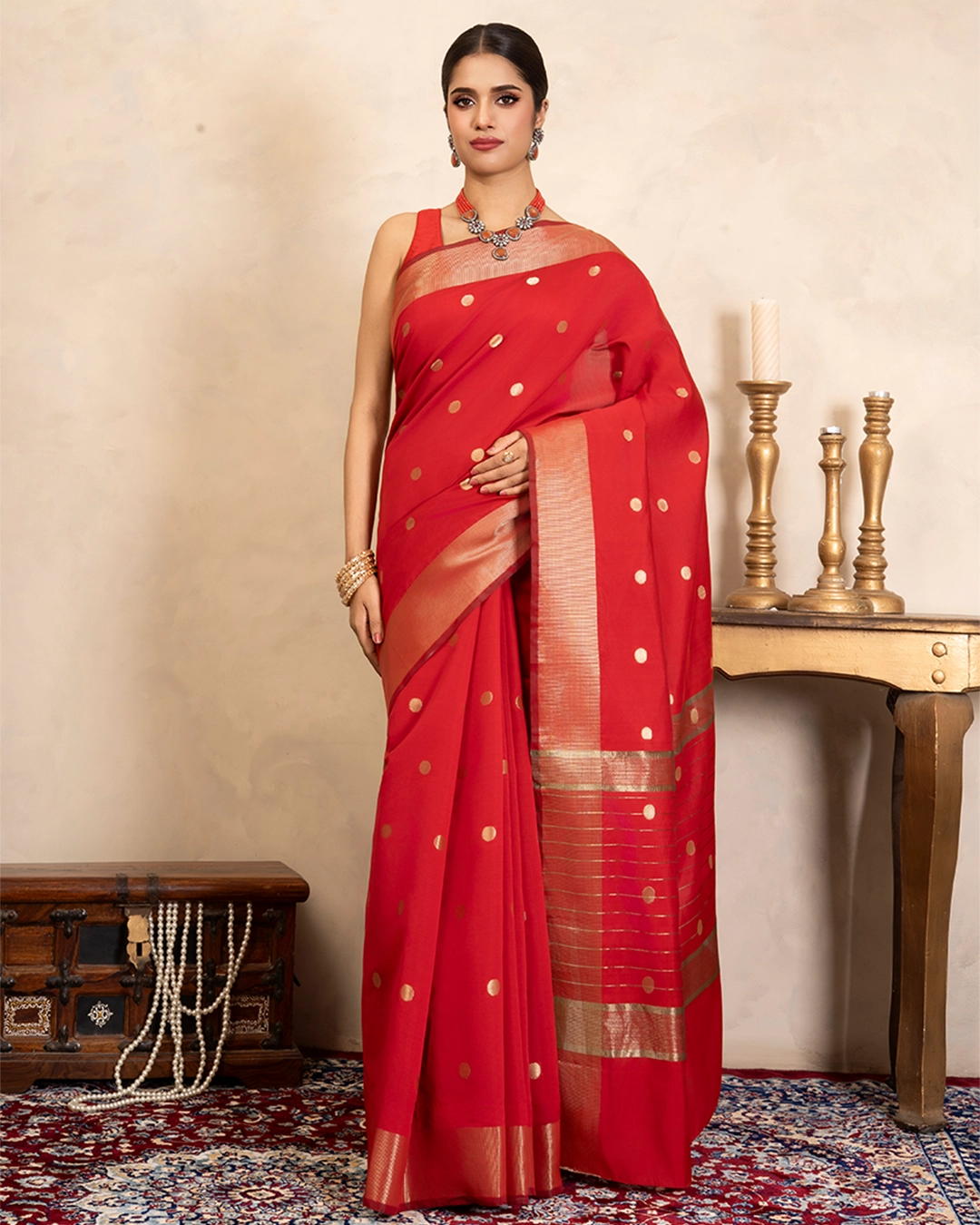
Zal from Benaras
Red Chiffon Silk Banarasi Handloom Saree
₹18,500.00
Red Chiffon Silk Banarasi Handloom Saree
Shop Now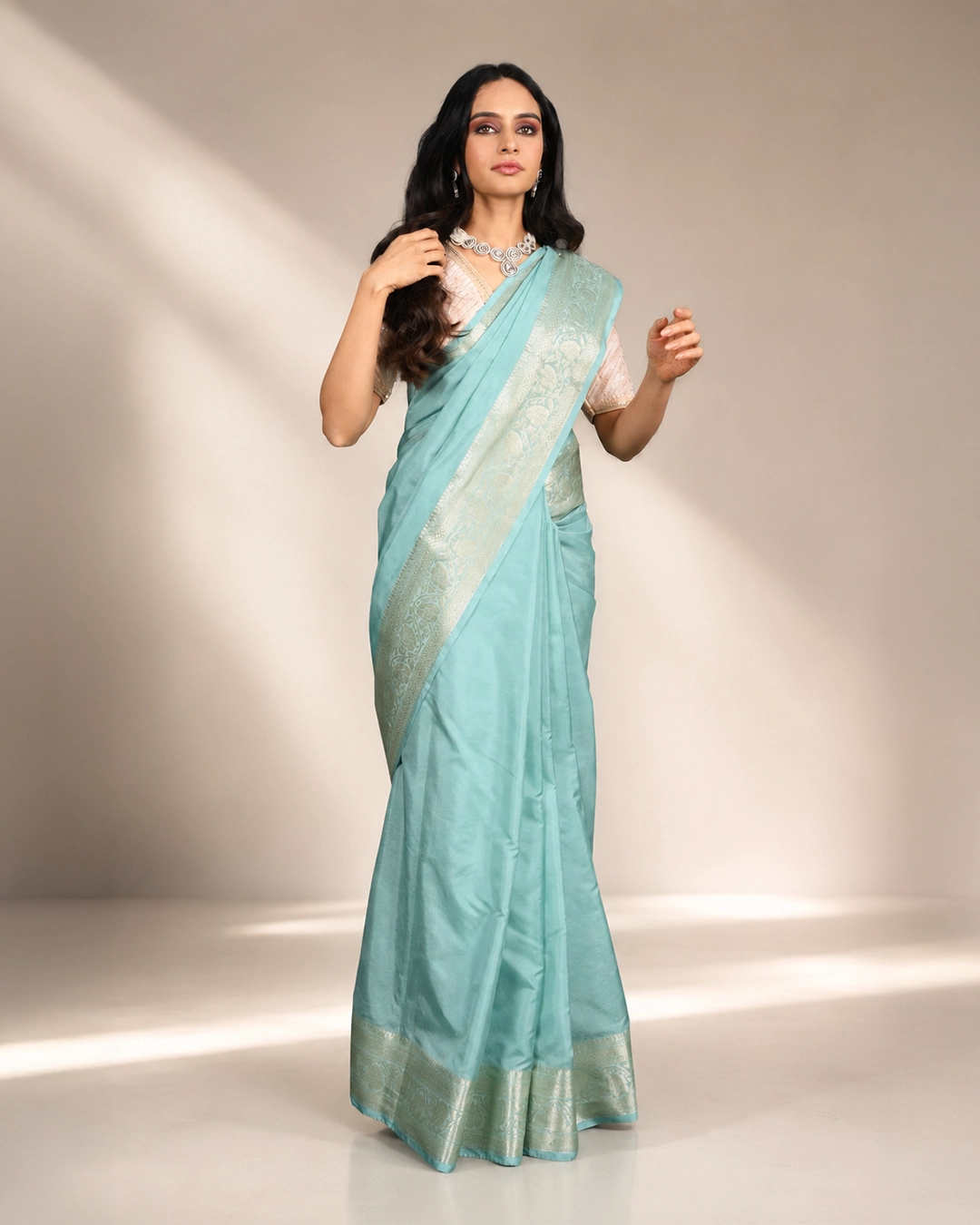
Zal from Benaras
Sea Green Pure Silk Banarasi Handloom Saree
₹13,800.00
Sea Green Pure Silk Banarasi Handloom Saree
Shop Now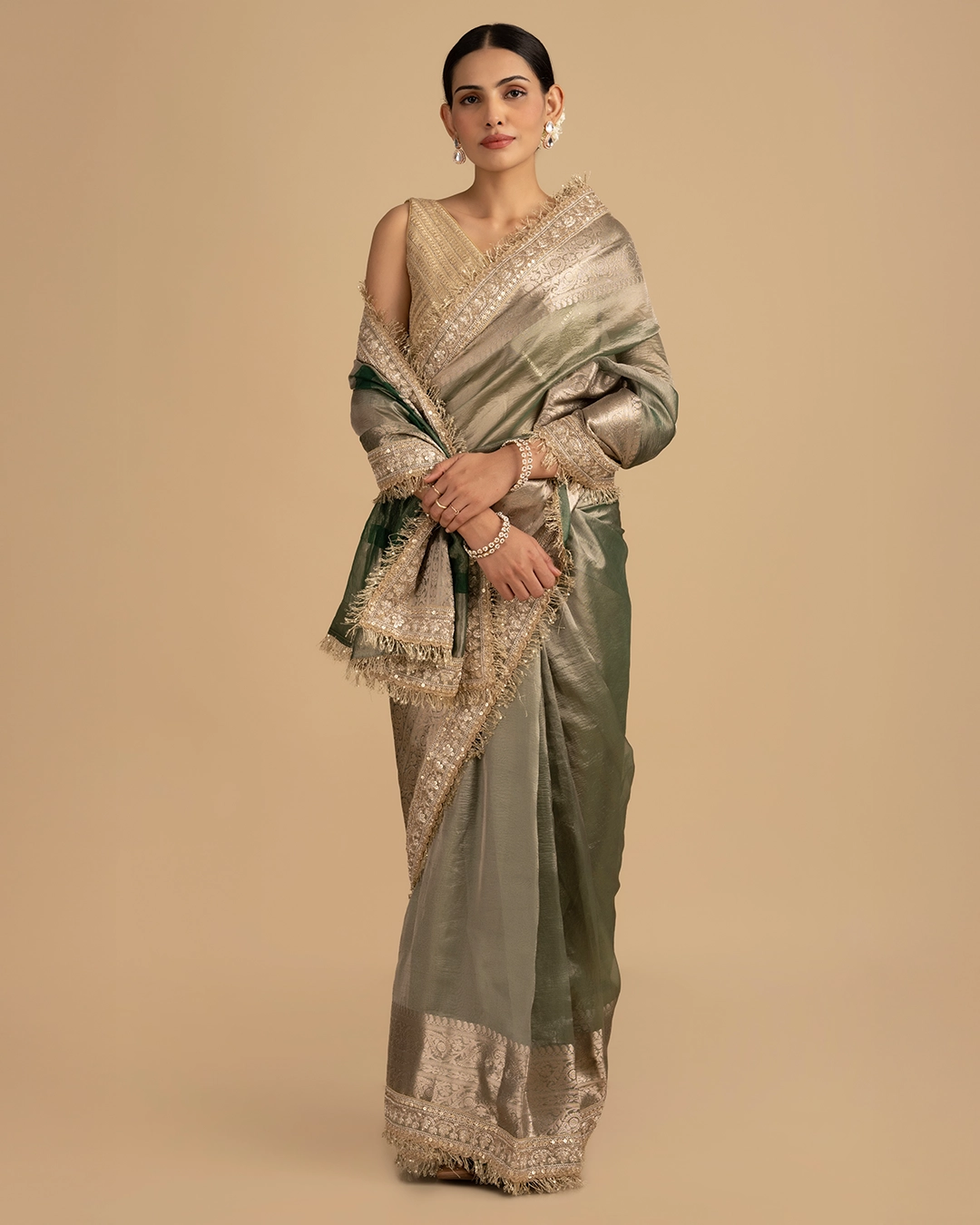
Zal from Benaras
Green Shade Crushed Tissue Silk Banarasi handloom Saree
₹24,000.00
₹19,200.00
Green Shade Crushed Tissue Silk Banarasi handloom Saree
Shop NowSouth India
- Kanchivaram Silk (Tamil Nadu): The fabric is thick silk, designed with temple portraits. Kanchivaram symbolizes ‘grace with grandeur’.
- Mysore Silk (Karnataka): Coming from the culture of Karnataka, Mysore silk is extremely soft, smooth, and light. They have a minimal yet regal approach.
East India
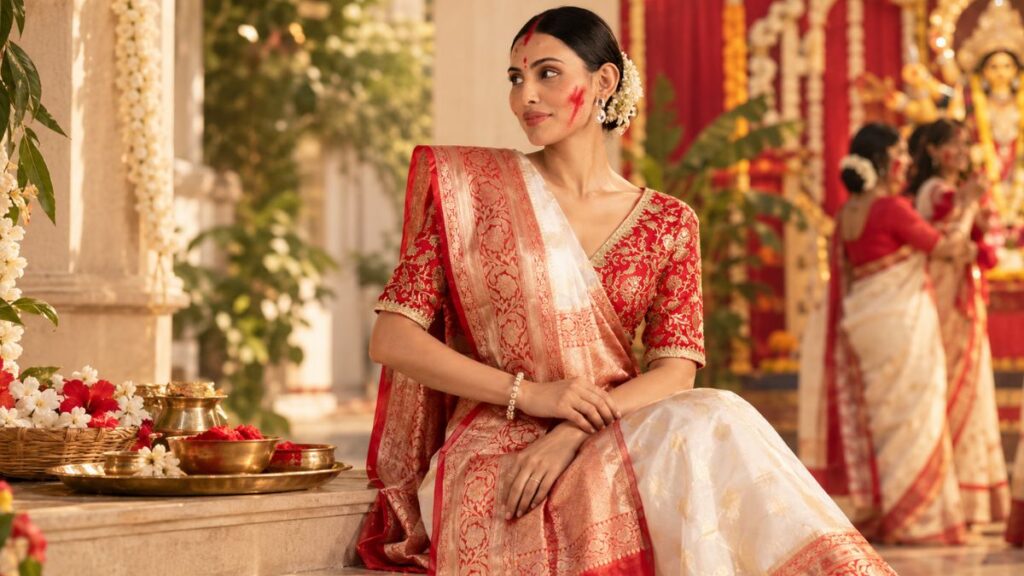
- Baluchari Sarees (West Bengal): Oh, that Bengali essence! the mythological motifs done on silk fabric, says it all. Sarees that truly narrate epic stories through a fabric. It really is ‘Baluchari’.
- Tant Sarees (West Bengal): Again, a creation of West Bengal, irresistibly comforting and beautiful cotton saree. Meant to wear daily.
West India
- Bandhani Sarees (Rajasthan & Gujarat): These sarees are crafted with dye-resistant technique, applying deep colours. They are the BFFs of Indian festivals.
- Paithani Sarees (Maharashtra): If there’s a saree marked as prized possession, that has to be paithani sarees. Stitched in signature peacock motifs and Zari, it can take anyone’s breath away.
These geographical variations present the depth of craftmanship in saree weaves, making this ethnic a treasured.
Styles That Are Colonial-Inspired
West began to influence east during the British colonial era (1757–1947). But failed to remove saree from its cultural roots.
- Entry of Blouses & Petticoats: The old draping left Victorian era. Influential woman Jnanadanandini Devi (Rabindranath Tagore’s sister-in-law) made blouse and structured drapes popular. Since then, sarees are considered to be more formal and appreciating in colonial society.
- Influence of British Fabrics: When chiffon and georgette arrived in market, demands of lightweight and flowy sarees increased by elite women.
- Freedom Movement & Saree as a Statement: Female leaders like Sarojini, Naidu, and Kasturba Gandhi chosed to wear handcrafted khadi sarees to protest British rules. It turned saree into a vision of India’s freedom movement.
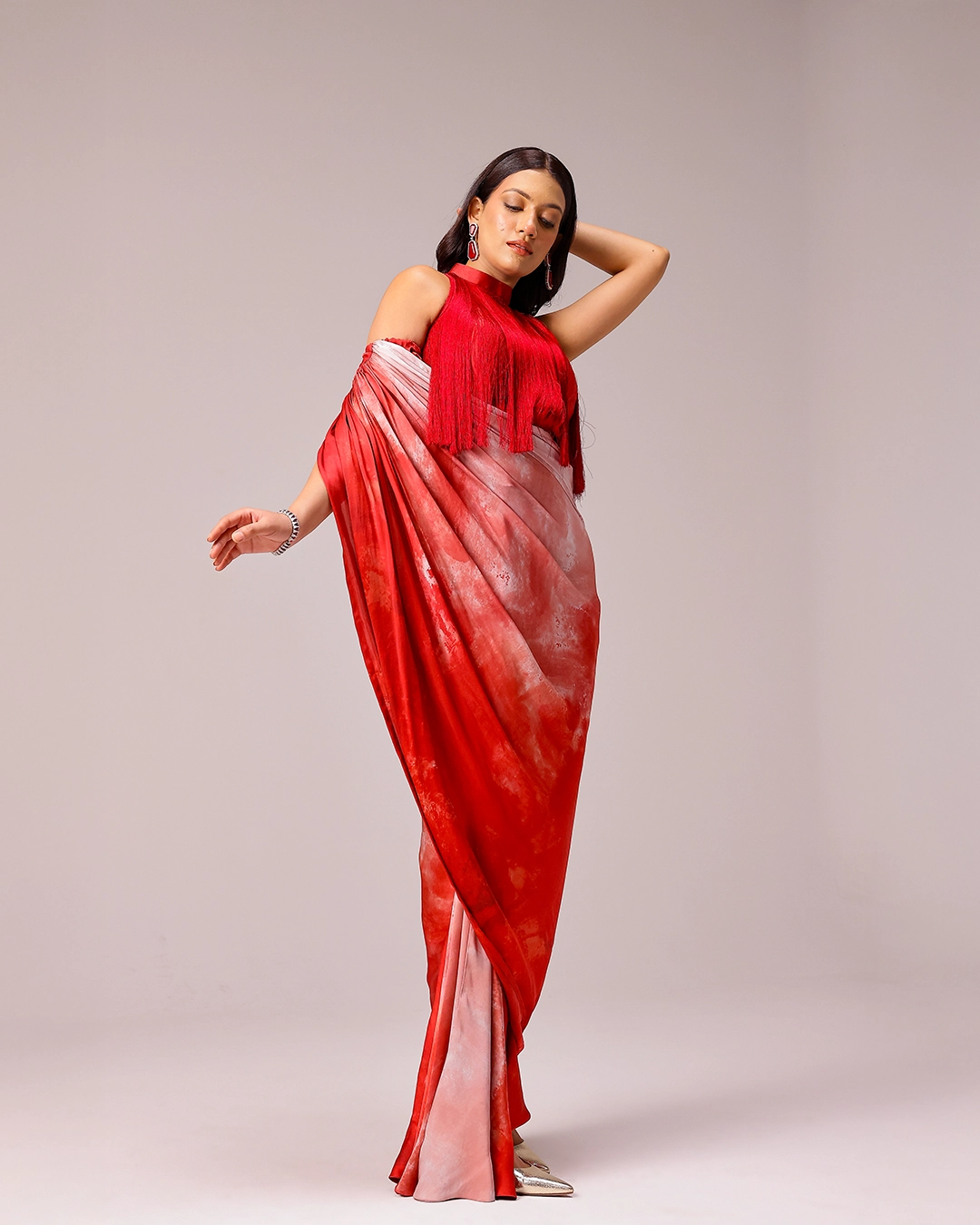
Studio Surbhi
Rosette Draped Sari with Fringe Blouse
₹19,999.00
The Rosette Draped Sari with Fringe Blouse is a striking fusion of sculptural draping and statement craftsmanship, designed for modern festive and cocktail occasions. Crafted in the signature Rosette print, the pre-draped sari offers effortless elegance with a fluid silhouette…
Shop Now.png)
Basanti Kapde aur Koffee
Tissue saree with Bustier
₹28,990.00
₹18,843.50
Tissue saree with Bustier
Shop Now.webp)
Damoiselle
Sunlit Ruffle Saree
₹17,000.00
A radiant sunshine-yellow ready-to-wear saree crafted in fluid viscose georgette, elevated with layered ruffles at the hemline for a playful yet elegant finish. The deep-neck blouse is adorned with sequins and bead embroidery, enhanced by delicate fringe details at the…
Shop NowEthnic Evolution Through Bollywood
Indian cinema has major contribution in trending modern sarees. From the 60s generation to today’s Bollywood hits, sarees have been constant in cinematic fashion.
- 1950s–1960s: Actress Madhubala and Meena Kumari’s favourite Banarasi and silk sarees, which mirrors traditional choice.
- 1970s–1980s: Rekha’s favoured Kanchivaram sarees to gain them immortality in ethnic fashion road. On the other side, Sridevi’s chiffon picks in cinemas set trends for upcoming generation.
- 1990s–2000s: Designer sarees started having its moment when Bollywood legends Madhuri Dixit and Aishwarya Rai decided to show up in rich-embellished net and georgette sarees.
- 2010s–Present: Moving onto Deepika Padukone and Vidya Balan, who are the reasons behind the revival of handloom sarees. They brought them back to runways and inspired ethnic fans.
Modern Sarees: The Contemporary Twist
While the love and support towards traditional sarees were stable, modern fashion designers have re-introduced sarees for today’s women. Here’s how:
- Pre-Stitched Sarees: These ready-to-wear sarees minus the draping struggle, doing a huge favour on busy professionals.
- Pant-Style Sarees: An innovative style of bringing saree and trousers together, where one gets ethnic & contemporary comfort at the same time.
- Ruffle & Layered Sarees: Feature dramatic ruffles and voluminous layers.
- Saree with Belts: A way to trend waist belts and add the essence of today’s world in sarees.
Worldwide Introduction: Sarees Across The Globe
In a very short time span, saree has achieved hall of fame with its unparallel beauty. Now, it’s an international language spoken at runways and red carpets.
- International Celebrities: Hollywood names Oprah Winfrey, Naomi Campbell, Gigi Hadid, Zendaya, and more have spotted in designer sarees at such prestigious events.
- Sarees at Fashion Weeks: Paris, Milan, and New York Fashion Weeks are blessed to have collections by Indian designers Sabyasachi and Manish Malhotra.
- Bridal & Fusion Sarees: Brides these days are reaching for sarees into their wedding trousseau, as they want Indian aesthetics and modern bridal couture to be invited together.
Edge of Glory: Traditions Forwarded & Evolved
Saree is a legacy created by artistic hands, to carry history, craftsmanship, and its behind-the-scenes. From ancient intro to contemporary approach, and cinematic frame; saree has evolved while sitting in cultural significance.
Whether it’s a traditional silk saree for your grandma, or a linen saree for your professional sister, it’s the fabric that will continue to be elegant and timeless. Ending this blog on a note saying, it’s an outfit that’s truly connected to the past, present, and future.
Bonisha Chatterjee
Bonhisha Chatterjee is a content writer with over 7 years of experience in digital media and storytelling. She has written extensively on entertainment and fashion; covering celebrity trends, style, lifestyle, and pop culture. Known for her versatile writing style and keen eye for detail, Bonhisha creates content that is both informative and reader-friendly. Her work reflects a strong understanding of digital audiences and evolving content trends.
More articles by Bonisha ChatterjeeRelated Articles
Enjoy This Article?
Subscribe to our newsletter for more fashion insights and exclusive content.
Subscribe Now