
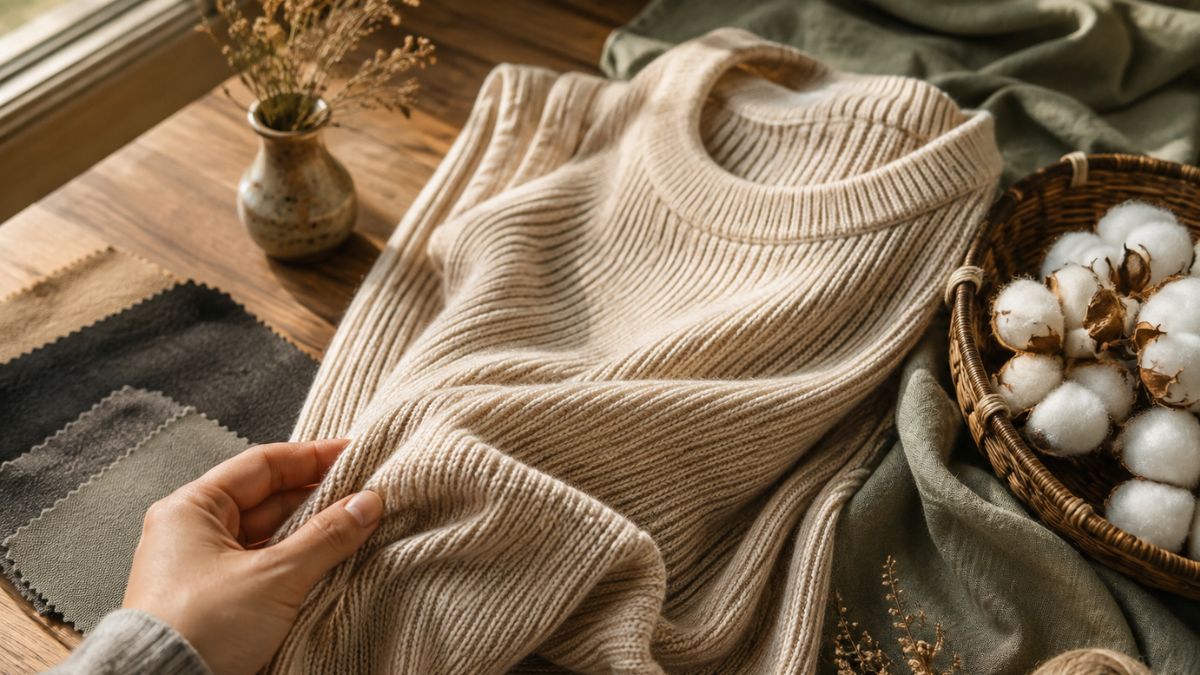
There’s an entire chapter that teaches us identify the fabrics we’re wearing, know what it’s made of, and how it’s made. But still some of us live with a question — how do we know if we’ve picked ‘the right one’? Knowing the fibre content and its manufacturing gives us a lot to think about, but there’s a few more details that are integral in choosing the right fabric ‘for yourself, by yourself’. Today’s beginners guide to fabrics covers every possible way you can try as a beginner, to find out the origin of your shopped clothes. From the very old burn method to water drop verification. Keep reading to know the source of the fabrics you wear daily.
Do you have sensitive skin? Buy recycled clothes? Or just curious of what your dress is made of? That label attached to your dress says ‘pure polyester’ but what if it’s faded, or your instinct says something isn’t right? Identifying fabric is what helps with purchasing healthy fabrics, for a healthy fashion.
Why Is It Necessary to Know Your Fabrics?
Wanting to understand fabrics isn’t just something out of curiosity — it influences your fashion life, health, financial status, and the ecosystem. Here are some enough reasons why verifying fabrics should be a part of your lifestyle:
Health Issues
There are a few synthetics which can cause itchiness on your skin, as well as eczema and dermatitis. Once you understand the concept of synthetic fabrics, it will keep your body away from such clothing materials like this.
Right Care of Garments
If you steam cotton fabrics or polyester ones at high temperature, then it will surely damage your clothes. So, knowing their characteristics will help you wash them, dry them, and store them properly to increase their life.
Quality Check
Some silk blouses are actually polyester. They don’t deserve a luxurious cost. Checking fabrics gives you the basic idea of the value of garments. It saves you from financial loss on misleading clothing labels.
Impact on Eco-system
If you look closely, synthetic dresses release mini pieces of plastic every time you wash it. Learning what your clothes are made of, makes you eco-conscious which safeguards both your health and planet earth.
Are Fake Labels on Dresses Prevalent?
Research has revealed that around 10 to 30% fashionable dresses have fake labels on them. Some specific products are written as silk or cashmere, where the reality is a different picture.
Types & Traits of Each Fabric
Before you start guessing a fabric, you need to be clear of your requirements. Below are mentioned the most common types and behaviour in fabrics:
| Organic Cotton | Polyester Synthetic | Natural Silk | Linen | Semi Synthetic | Spandex |
|---|---|---|---|---|---|
|
Soft & comfortable fabric which has fast moisture-soaking property.
Though it creases easily, cotton is the most used fabric globally.
Name t-shirts or bedsheets, this fabric exists everywhere. |
Smooth dress material.
Feels slightly like plastic.
crease-resistant but not comfortable to wear.
Dries fast but not airy enough. |
Highly smooth to touch and feel.
Fine sheen & texture, and very light in weight.
Protein fibre made of silkworm (most expensive fabric ever).
|
Fabric with a crisp texture and heavily develops messy lines on it.
Fibres of the flax plant is the origin of this fabric.
Extremely comfortable which is favourite to summer. |
A.K.A. Rayon, equally soft to cotton.
Very comfortable and airy.
Makes beautiful drapes.
The fabric is chemically created from wood pulp.
Works as an alternative of silk, in low budget.
|
Highly stretchable
can be stretched 5times more than its length.
Exists in leggings, swimwear, and any stretchy dress.
|
| Wool | Nylon |
|---|---|
| Warm feeling, with a little rough texture and elastic.
Provide warmth even in wet condition.
It’s a natural fibre comes from animals like sheep (most common), merino, cashmere, and alpaca.
|
Shines a little, feels smooth, stretchable nature, and light as a feather.
Dries quickly and lasts longer.
Mostly found in sportswear and stockings. Releases little pieces of plastics with very wash. |
5 Ways To Know Which Fabric Is It?
You can’t take any one specific test to give you 100% accurate result but the outcome from taking 2 or 3 of these tests will be trustworthy to identify any fabric you meet.
Identify by Touching & Feeling Fabrics
Surprisingly, your fingertips work as a great fabric detector. How? Read below:
- Cotton: Touch the fabric and see if it feels soft on your skin. Cotton keeps getting softer with every wash.
- Polyester: Much more smooth and cooling compared to cotton. It has a slippery or plastic-like quality which stays that way, no matter the fabric is wet or dry.
- Silk: Again, a friend of extreme smoothness. Take this old-time test – Thread of real silk smoothly enters a ring, but synthetic threads get stuck.
- Wool: It feels a little fuzzy when you touch it, but a very warm fabric.
- Linen: The texture of linen is a little rough and crisp. You can see the uneven weaves on it, and it keeps getting softer with every wash.
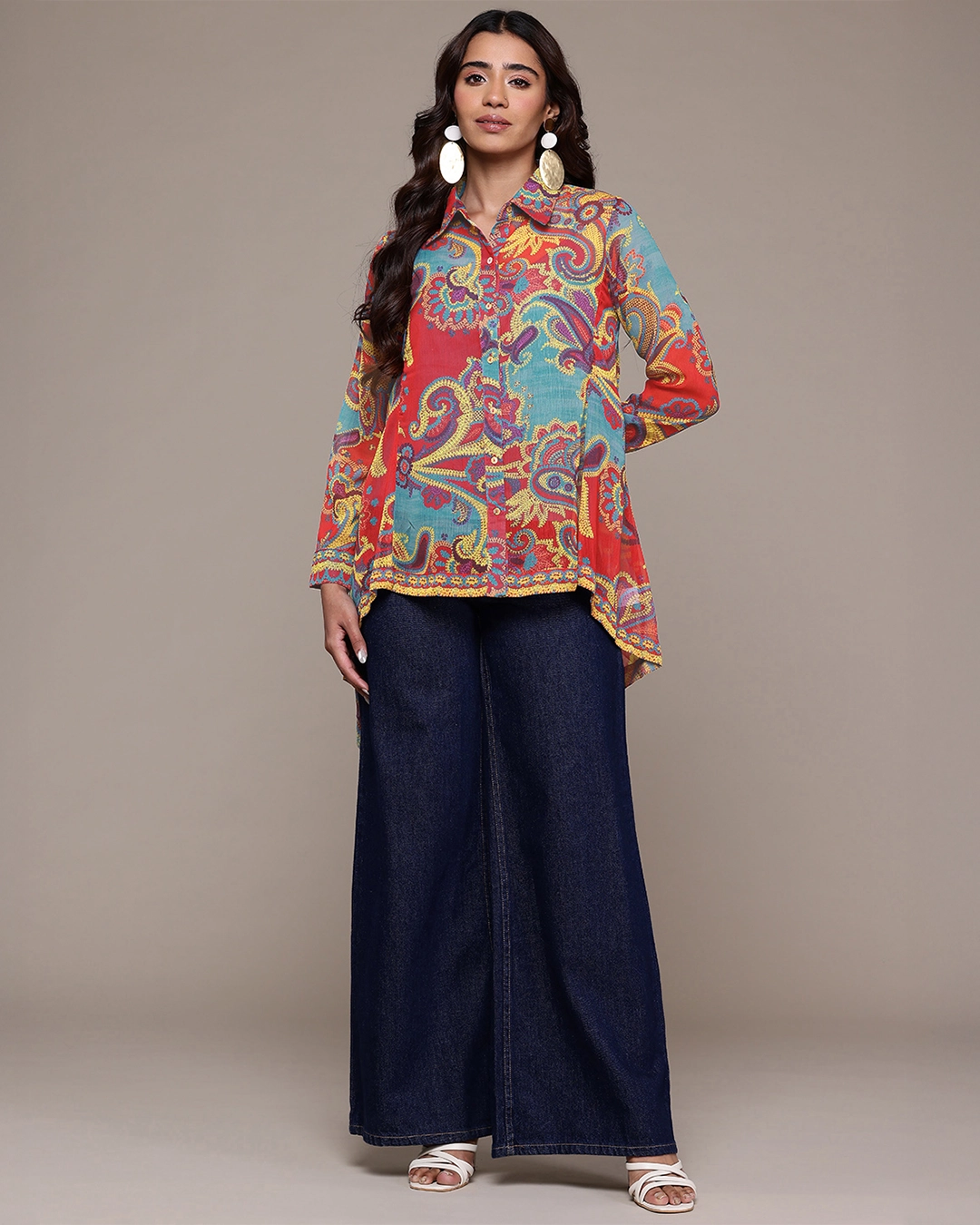
Aarke Ritu Kumar
Turq Petal Paisley Shirt
₹3,500.00
This fresh blue paisley shirt brings effortless ethnic charm to everyday dressing. Crafted in polyester in a paisley with full sleeves, it drapes with effortless ease. Style it with turquoise accents and flats for easy outings or a casual day…
Shop Now
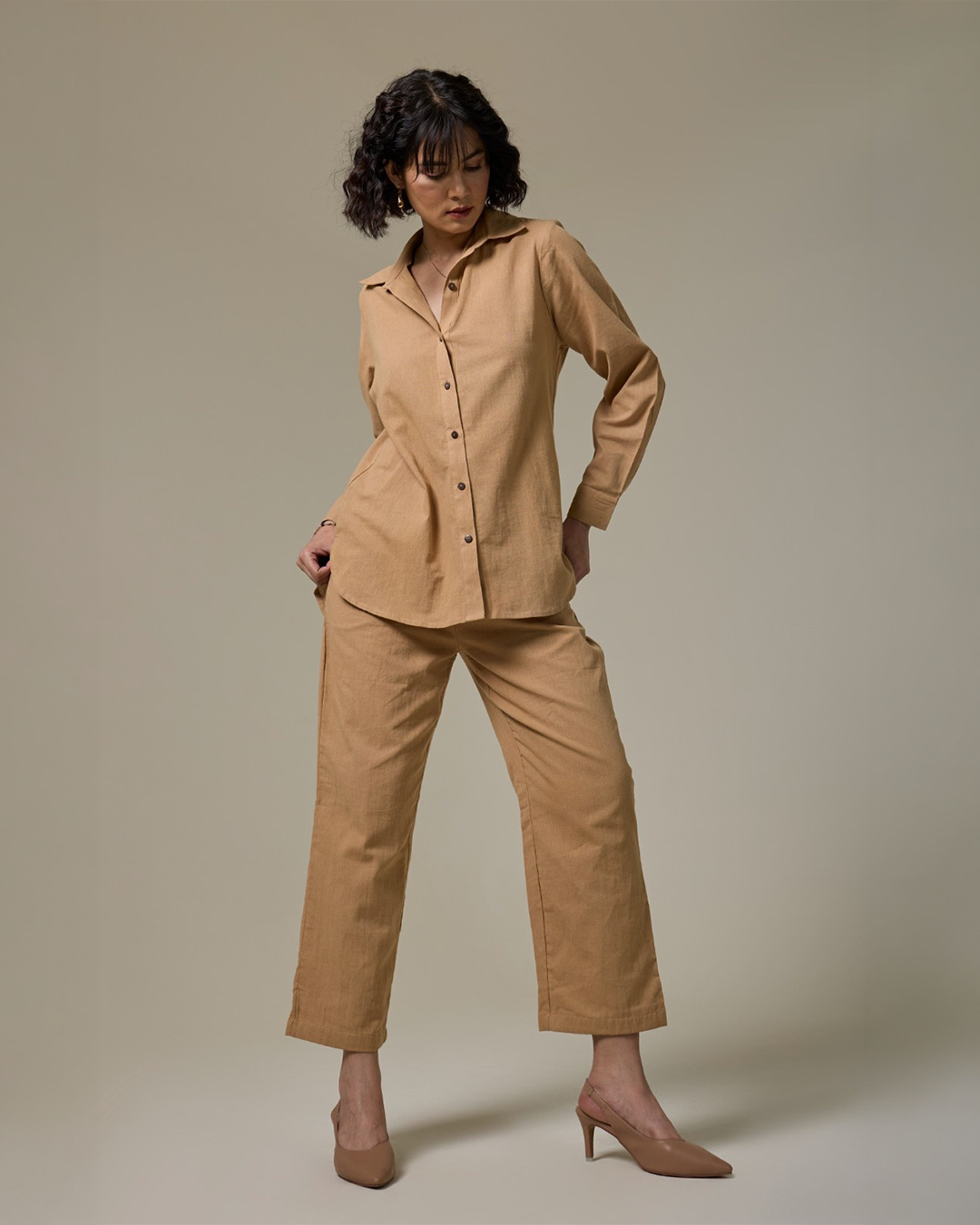
Studio Rabha
Clay Cotton Linen Cord Set
₹4,950.00
₹3,465.00
Rooted in the hues of sunbaked clay, Clay co-ord set is designed for serene, effortless living. Crafted in a premium cotton-linen blend, it features a relaxed full-sleeved shirt and easy, breathable pants — tailored for both quiet days and journeys…
Shop NowThe Burn Test (with caution)
Take the burn test with small piece of fabric, length around 1 inch. Perform it where no source of fire is present and keep water near the testing place. Make sure the area is well-ventilated and never take the burn test while wearing the fabric. Now, each fabric reacts differently near flame.
| Natural Fibres | Synthetic Fibers |
|---|---|
|
Cotton or Linen – It smells like burnt paper when you burn it. Sheds fine & soft ash.
Silk – Takes time to burn but smells like burnt hair afterward and drops dark ash bead.
Wool – Reacts the same as silk. |
Polyester — Melts and releases black smoke while burning. Smells like chemical or sweet. Casts off strong and uncrushable bead.
Nylon — It melts even before it catches fire. It has a plastic-like smell and leaves behind a strong, circled, grey bead.
Spandex — Melts and drips faster with sticky leftover. Its chemical smell is so strong. |
Test with Water Drops
Pour one drop of water on the fabric and see how fast it absorbs the water. This easy test immediately detaches natural fibres from artificial ones:
- Instant Absorption — Fabrics such as cotton and linen soak water within seconds. They take water drops right after they fall on it.
- Repelling & Rolling — Both polyester and nylon resist water. The drops keep flowing on the fabric like a tiny ball, before moving across.
- Slow Absorption — Silk soaks water with a slight damp spot visible. Wool soaks moisture but the outer layer of it doesn’t get wet, so it stays dry longer compared to cotton.
Observation Power
Strong visuals can teach you a lot about fabric. Hold the fabric close to the light and try to notice these points:
- Sheen: Silk has natural sheen which moves with your activities, but polyester has an artificial shine. Cotton and linen are sheen-less, as they carry a matte look.
- Texture: Linen has noticeable bumpy weaves, whereas cotton has uniform ones. Polyester threads are smooth and looks entirely the same .
- Wrinkle Test: Hold the fabric in your fist and then crush it for 30 seconds. Now, release the fabric, ad observe its state. If it’s a linen, it will have heavy wrinkles. cotton will have limited wrinkles, and polyester will make a smooth comeback right away.
- Thread Test: Take a single thread and loosen it. Now, natural fibres look uneven but synthetic ones melt when it meets fire.
Paying Attention to Instruction Labels
The easiest and most trusting way to detect a fabric is, noticing if the labels attached to your cloth mentions present date and accurate information. Here’s how to do it:
- If it says 60% Cotton or 40% Polyester, consider it a blend. It confirms the nature of a fabric.
- Whenever you see ‘dry clean only’ written on it, it generally usually explains silk or gentle wool. Use of steam in low temperature refers to synthetics. Most vibrant synthetics have ‘do not bleach’ mentioned on it.
- Linen fabric carries the origin of Belgium, France, and Ireland. Silk in high quality belongs to China, India, and Italy.
Ending today’s fabric guide on a note, that verifying fabrics means expecting healthy & authentic fashion. It shows that you don’t compromise with the quality in fabric, as well as with its pros & cons. Check out the exclusive set of premium silk and cotton fabrics in Sevora to make your summer more sunny & refreshing.
Bonisha Chatterjee
Bonhisha Chatterjee is a content writer with over 7 years of experience in digital media and storytelling. She has written extensively on entertainment and fashion; covering celebrity trends, style, lifestyle, and pop culture. Known for her versatile writing style and keen eye for detail, Bonhisha creates content that is both informative and reader-friendly. Her work reflects a strong understanding of digital audiences and evolving content trends.
More articles by Bonisha ChatterjeeRelated Articles
Enjoy This Article?
Subscribe to our newsletter for more fashion insights and exclusive content.
Subscribe Now