
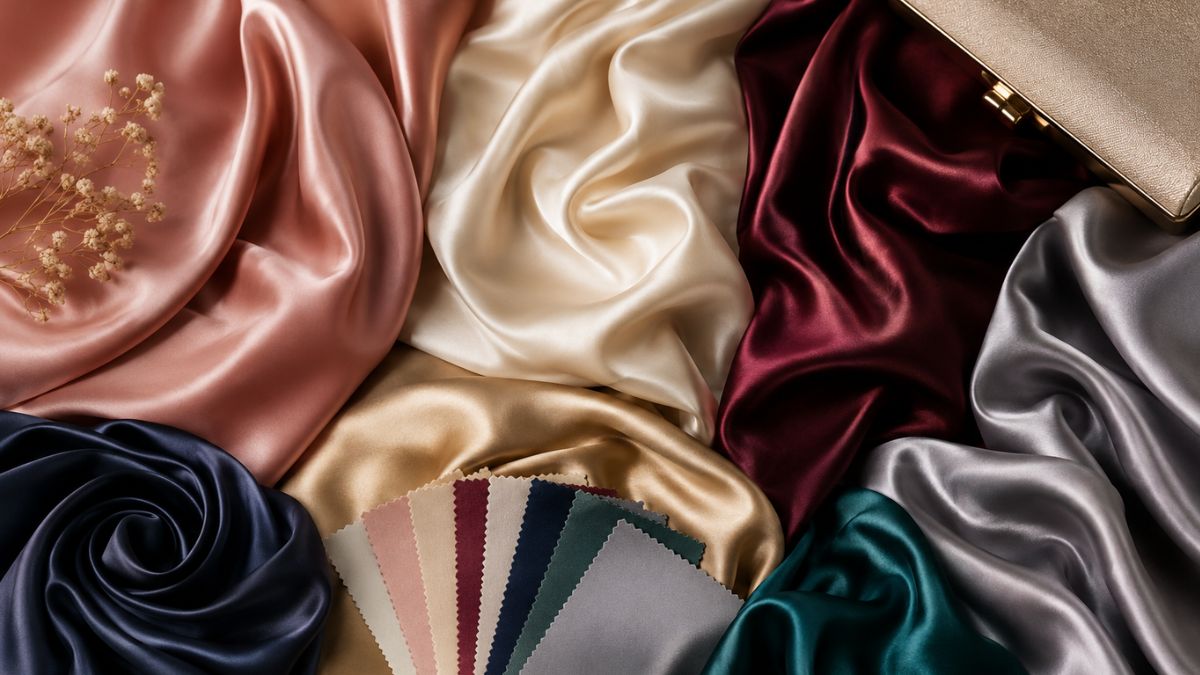
Here’s How To Identify Satin Fabrics
Satin has always been considered among the most luscious and quiet-luxury fabrics we wear when there’s a high-class event or date night happens. But obviously versatility doesn’t stop there! Satin shirts are a muse to formals, so are satin skirts. You can just get up and go for a satin shopping right away, but how would you find the authentic satin among countless tags that promises fake quality? — No, it’s trickier than you think it is.
On top of that, e-commerce shoppers can’t physically check the fabric themselves. So, to make things easier, we’ve come up with this blog to do the legwork! Today’s read will reveal every little thing about satin, so that you don’t fall for duplicates when you shop for it.
Introducing Satin
Satin is introduced by its weaving pattern, not fibre. Threads are always interlaced in satin weaves. The fabric uses a floating yarn technique where the weaving structure significantly decreases the intersections with warp yarn over 4 to 12 weft yarns before interlacing with a single thread.
This unique structure shows you how to identify satin fabric, as the unbroken floats bounce and scatter light properly to create a smooth & mirror-like surface a.k.a. the face of fabric, while the reverse side stays dull.
How Many Types Are They?
- Silk Satin (Mulberry Satin): It’s pure silk, with the most luxury and glossy visual. Being incredibly soft and comfortable, designers use silk satin to couture gowns, bridal wear and expensive sarees.
- Polyester Satin: They are very affordable and durable, has wrinkle-resistant property, reason why they’re mostly seen in both outfits and décor.
- Charmeuse Satin: Fluid and light as a feather! Shines brighter than ever on one side. Gowns, lingerie, and nightwear is made from this type of satin.
- Duchess Satin: As heavy as structured, with a shine like matte. Perfect satin material for bridal gowns, party gowns and lehengas.
- Crepe Back Satin: You can say it’s a 2-in-1 fabric where there’s satin on one side, and crepe texture on the other. Highly versatile for blouses & sarees.
- Stretch Satin: It’s a blend with spandex, which is comfortable and flexible to wear. Mostly used for fitted dresses.
- Messaline Satin: Lightweight and high lustre at the same time. It is as smooth as glossy.
- Antique Satin: Has a vintage sheen while remaining dull. It is mainly applied to retro vogue and upholstery.
- Peau de Soie (French Satin): Famously called “Skin of silk”, Soft in nature, and semi-matte in look. Best for designer bridal wear.
- Satin Georgette: Being light in weight and flowy, it’s considered to be the perfect fabric for sarees and dupattas.
- Baronet Satin: Baronet satin is the blend of rayon & cotton. Gives semi shine, Used in menswear, upholstery.
- Slipper Satin: Applied in shoes, handbags, and accessories.
- Sateen (Cotton Satin): Produced by cotton, sateen mimics its softness & breathability. Most common fabric used for bed sheets.
Shine of Satin: What’s The Reason Behind?
The smooth upper side and less interlacing allow flexible light movement all over the fabric, reflecting constant gloss.
The Historical Journey of Satin
Satin’s journey began 2000 years ago, in China. The name ‘Satin’ is originated from “Zaytuni,” which refers to the port of Quanzhou (major city of silk-exploration). It was first woven from pure silk and used by European royal family during the Middle Ages. Today, satin is available from affordable poly one to ultra-premium silk quality.
How Would You Know If It’s Really Satin?
This is where things get interesting. There are over 10 types of satin which are categorised by the material or the weave types. Here are the basics to learn how to identify satin fabric easier.
Silk Satin: The OG of all satins!! Definition of luxe, incredibly soft, and shiny enough to spot its quality from a far.
Synthetic Satin: The most budget-friendly substitute of silk satin. Here, synthetic fibres blend with the weave; similar to polyester or nylon. It features the durability and visual of silk but can’t compete its finesse.
Now, here are some ways to separate the authentic from the bad ones:
- Satin fabrics with good quality features natural lustre and matte reverse side.
- If it feels soft and buttery-smooth once you touch the fabric, it indicates a pure silk satin.
- Premium satin’s drape flows freely.
- Take a heat test by rubbing a small piece of satin between your fingers. If it’s real, it will warm up unlike synthetics.
- And finally, the ring test. Just slide a piece of fabric through a jewellery ring. Genuine silk easily glides through, whereas synthetics usually gets trapped or stuck.
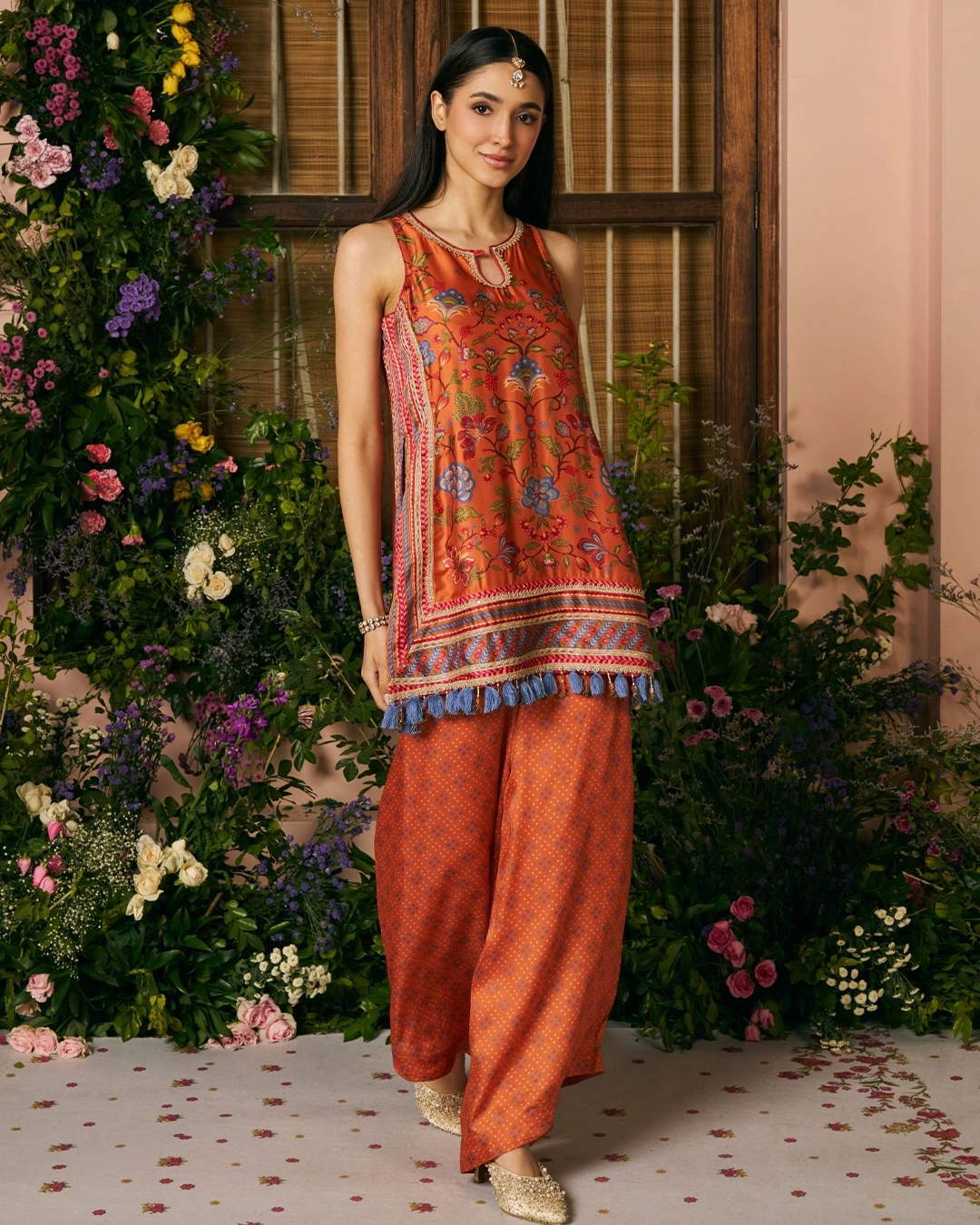
Mulmul
Taali Cupro Satin Printed Orange Kurta Set
₹12,950.00
Taali Cupro Satin Printed Orange Kurta Set
Shop Now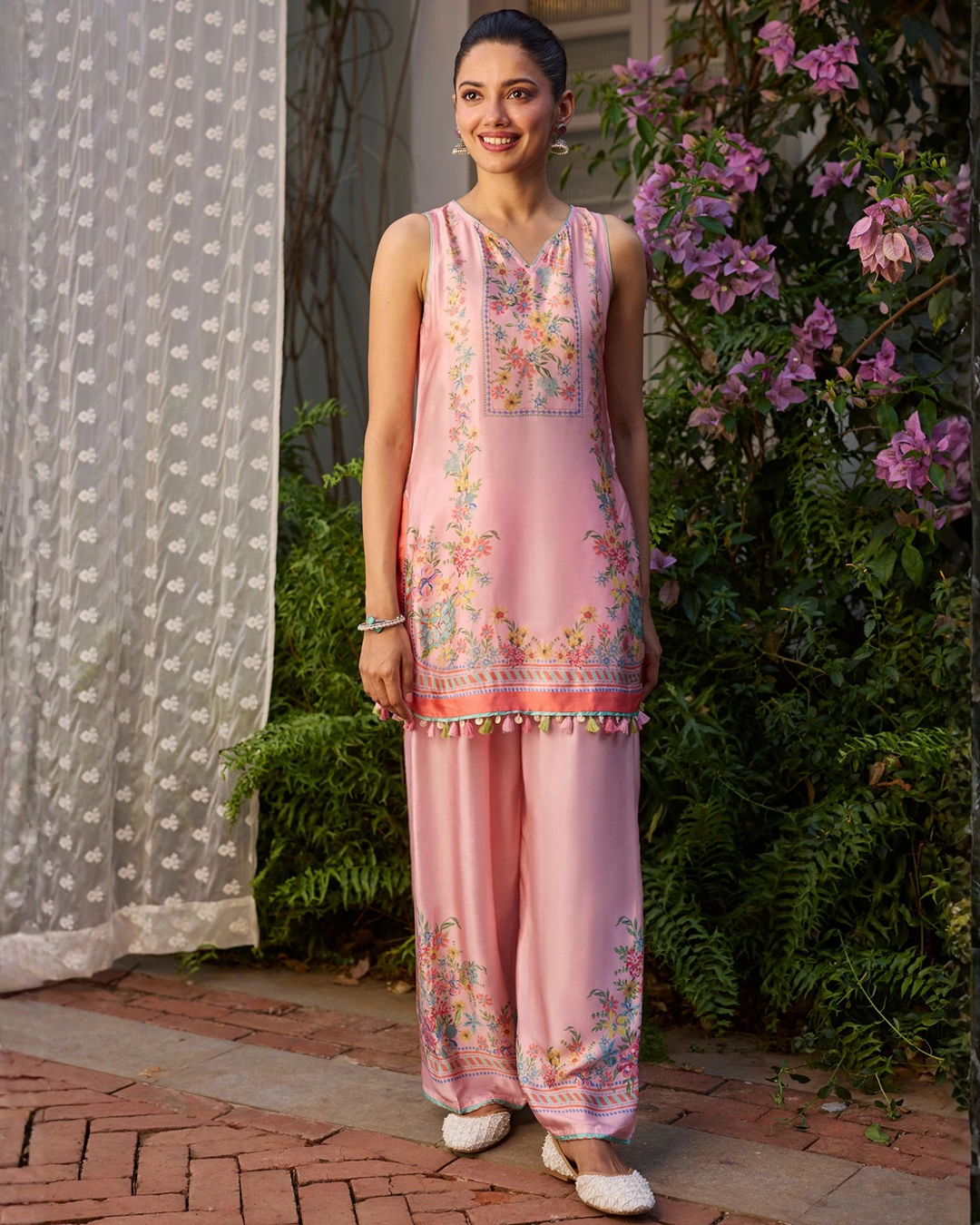
Mulmul
Zivae Cupro Satin Printed Pink Kurta With Farshi Salwar
₹13,450.00
Crafted in fluid cupro satin, this set features a sleeveless, straight kurta in a soft blush pink, detailed with delicate floral prints and a finely worked neckline. It is paired with relaxed, wide-leg pants with coordinated border detailing, and a…
Shop Now
Mulmul
Santree Cupro Satin Champagne Shirt Set
₹13,950.00
A relaxed shirt-and-pant set crafted in smooth cupro satin with a soft, fluid finish. The Santree silhouette is designed for ease, offering a clean structure that drapes comfortably on the body. The champagne tone keeps it understated yet occasion-appropriate, making…
Shop NowCare Instructions
- Washing: Hand wash is the most safe method, to take care of clothes. Gently swirl the fabric in cold water, without scrubbing or twisting it. Now, if you prefer washing clothes in machine, turn the clothes inside out and put it in a mesh laundry bag to safeguard them. Don’t forget to select the no-spin or low-spin option.
- Drying: Satin pieces always need air dry. Lay them instead of hanging, as it causes creases and discolouration. In case, you have no choice but to use a dryer, set it in low heat and remove the dress once it’s still damped to naturally finish the air-drying.
- Ironing: Always iron a satin fabric on a low or medium temperature and from the reverse side to maintain its shine. Another option is to steam it, just make sure to keep the nozzle 6 inches away to protect the fabric.
The Bottom Line
Figuring out how to identify satin fabric depends on a label that promises “satin” or “silky” can mislead shoppers because satin denotes a weave pattern rather than raw material. It takes accurate knowledge to check the glossy front and matte back.
One can know the type of fibre by touching it and taking a burn test. It is possible to craft satin fabric from silk to offer superior breathability and natural shifting shimmer; or from synthetics which are budget-friendly but less breathable.
Pure silk satin commands premium pricing due to intricate natural sericulture, while synthetic polyester offer cost-effective, mass-produced textile options. Check out the latest & highly desirable satin outfits in Sevora today!
Bonisha Chatterjee
Bonhisha Chatterjee is a content writer with over 7 years of experience in digital media and storytelling. She has written extensively on entertainment and fashion; covering celebrity trends, style, lifestyle, and pop culture. Known for her versatile writing style and keen eye for detail, Bonhisha creates content that is both informative and reader-friendly. Her work reflects a strong understanding of digital audiences and evolving content trends.
More articles by Bonisha ChatterjeeRelated Articles
Enjoy This Article?
Subscribe to our newsletter for more fashion insights and exclusive content.
Subscribe Now