
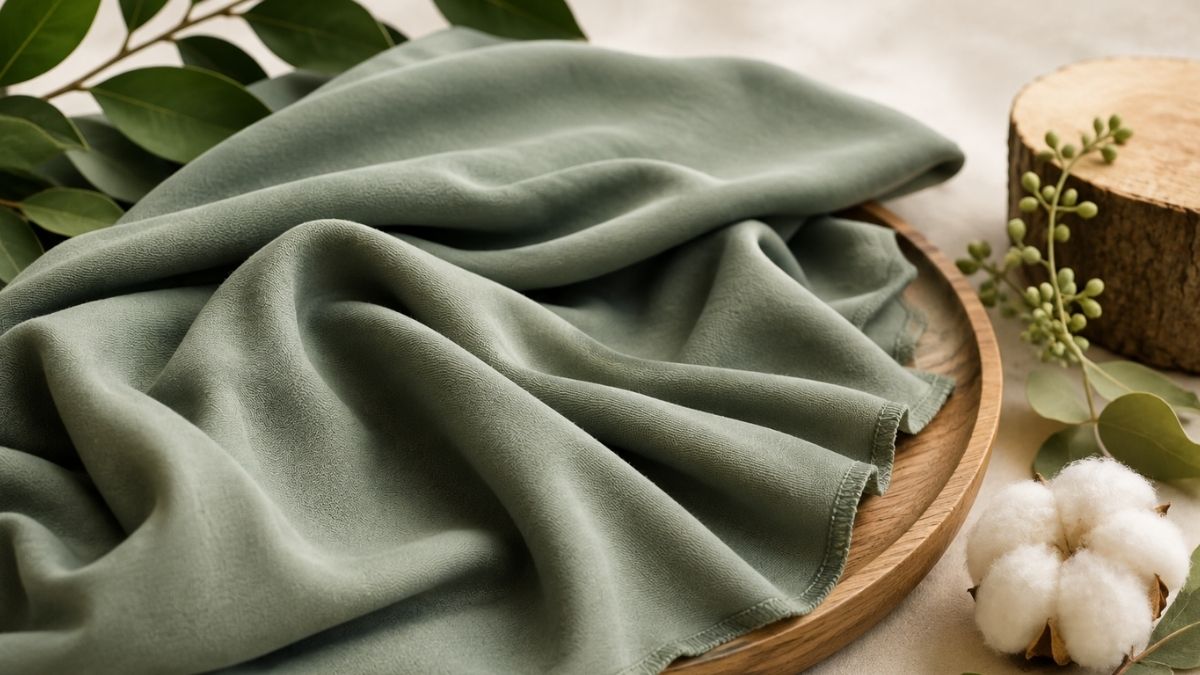
Do You Really Know What Modal Fabric is?
Some decided to call it a loungewear fabric and some, as a sustainable textile choice. In both ways, modal fabric is evolving the future of fashion with its light as a feather, stretchable, and airy characteristic. Today’s fabric guide explains what modal is, how it’s processed, its nature, how it compares to other fabrics as well, and a lot more. Everything below reflects light on the sidekick of rayon.
What’s a Modal Fibre?
It’s basically a cellulose fibre regenerated by semi-synthetic fabric, through viscose process; so, it doesn’t collapse while washing like rayon used to earlier. Made from beech tree pulp, it’s primarily used for bottom wear, pyjamas, bed sheets and towels. Being a form of rayon which is another vegan textile, it’s more durable and flexible compared to standard ones.
Manufacturers often mix modal fibre with cotton and spandex to make it extra strong. Modal is considered a luxurious fabric, costing heavy price than cotton or viscose. It was developed in Japan in 1950s and now produced by an Austria-based company Lenzing AG, famous for having a trademark in fabric.
Today, Lenzing Modal holds the majority of the global textile market. This sustainable fashion belongs to beechwood forests in Central Europe and FSC (Forest Stewardship Council) certified.
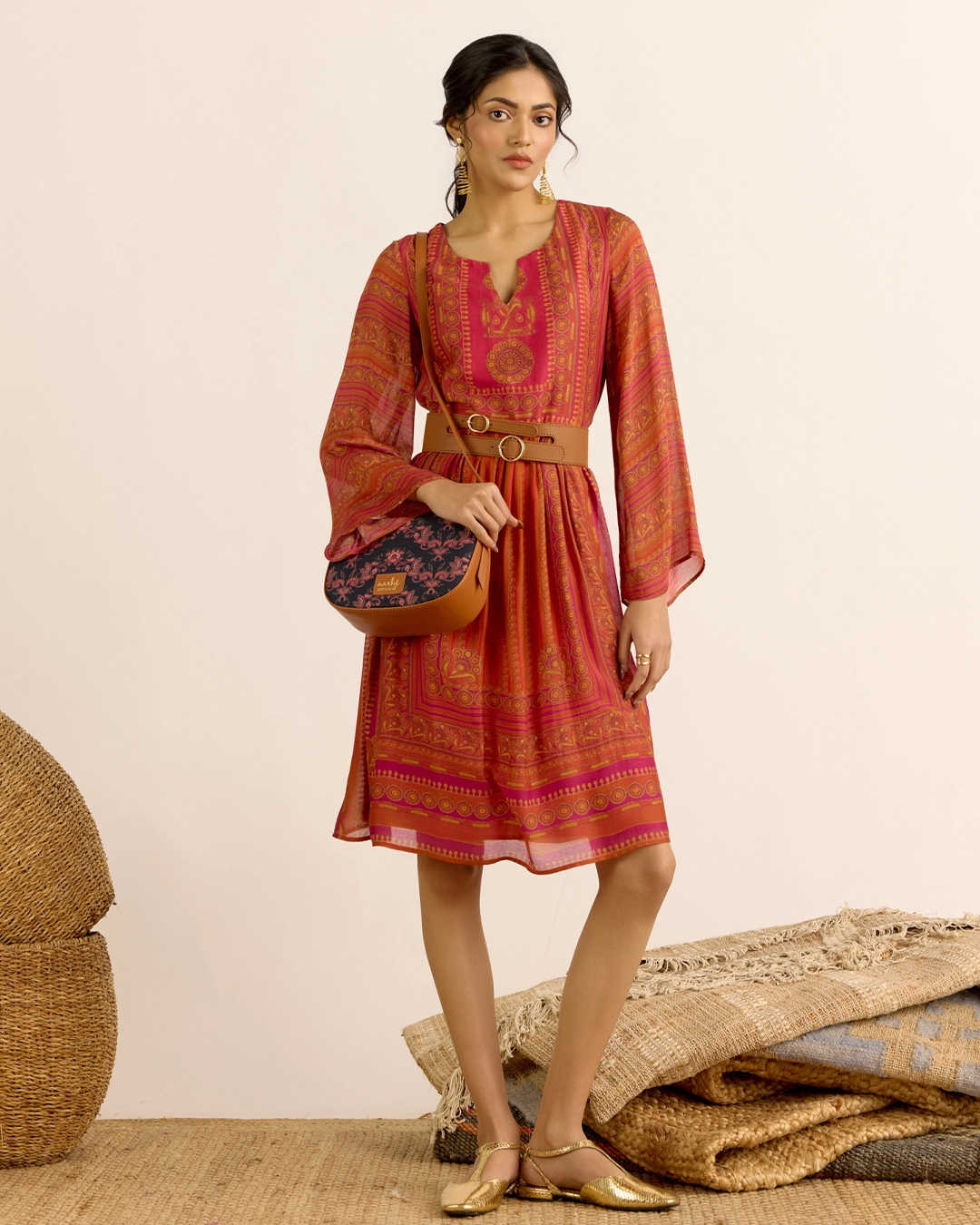
Aarke Ritu Kumar
Rust Arpana Short Dress
₹5,200.00
Effortlessly beautiful — this short dress in soft modal brings effortless occasion dressing to everyday dressing. The full sleeves silhouette and easy drape make it a piece you'll reach for often. Style it with oxidised silver and block heels for…
Shop Now.webp)
Aarke Ritu Kumar
Olive Toobah Long Dress
₹5,200.00
This vibrant green floral print long dress brings effortless ethnic charm to everyday dressing. Crafted in soft modal in a floral print with flared sleeves, it drapes with effortless ease. Style it with oxidised silver jewellery and kolhapuri sandals for…
Shop NowHow Is It Made?
This vegan fabric is produced by spun beech tree cellulose. Which is why it’s usually considered to be an eco-friendly substitute for cotton. Beech trees take very less water to grow and so is the production process (up to 10 to 20 times less).
Though modal is plant-based, its manufacturing process involves chemical-soaking of the fabric. It is drenched in sodium hydroxide and carbon disulfate, to categorise modal ‘semi-synthetic’.
Even when it’s a type of rayon fabric, its durability takes over regular rayon and gives cotton-like feeling.
The Production Process for Modal
- First, cellulose is extracted from the pulp comes after harvesting and chipping beech trees.
- Then, that cellulose is turned into sheets, which are drenched in chemical like sodium hydroxide.
- At last, the sheets are broken into tiny pieces and saturated in carbon disulfide to produce sodium cellulose xanthate.
This is how the yarn converts modal material after going through weaving or knitting.
Various Names It’s Known By
Modal is often called “HWM (high wet modulus) rayon”, “Lenzing Modal” (branded), or “micro-modal”. You’ll see “modal” “Malha modal” for knit versions, or “modal micro” in documents of Portuguese factories. Modal micro is used to describe luxurious innerwear while Malha modal refers to the knitted ones. If you see a label simply says “rayon”, that means it’s almost a standard viscose, not modal.
12 Ways Wearing Modal Fabric Can Benefit Us
Modal is an expensive clothing piece and is often used to mix with other fabrics to provide the premium feeling. Being light and soft as a feather, modal is now extremely in demand by fashion designers who support sustainability.
1. Having a stretchable nature, makes modal ideal for t-shirts and sportswear.
2. Modal features incredible softness. Hence, it’s mostly seen in bed sheets, pyjamas and undergarments.
3. And what to comment on its breathable nature! Just imagine the comfort a Modal fabric dress can give to sportswear and casual wear.
4. Being water absorbent is one of the best benefits of this fabric. Modal is 50% more absorbent than cotton. The existence of micropores inside the fabric can absorb any water or sweat they encounter.
5. Durability? A dress belong to modal fabric shows that! It’s a very strong material due to its tight weave and long fibres.
6. Yes, you can call it drapey. Just like rayon and other silk options, modal drapes so beautifully that it has become the first for clothing & decor.
7. Eco-conscious. Made from plants and used by just a few chemicals in production, modal is a pure vegan fashion.
8. Most impressive part? – it’s pill-resistant. The fabric doesn’t support pilling and has a smooth finish, which makes a daily wear perfect.
9. Modal is colour-fast, which means the fabric is dye-absorbent as well in hot water and doesn’t bleed it during the process.
10. Unlike most of rayons, modal doesn’t diminish or shrink in wash.
11. This fabric is completely biodegradable.
12. As modal resists wrinkles, it stays smooth even with less ironing. It doesn’t crease.
Modal Care Guide: How Do You Care for Modal Clothes?
Modal is washable in machine and tumble dried. But it is always advisable to double check the washing instructions on the label, as the blended ones may differentiate the requirements.
- You can wash a pure modal fabric in any water temperature, but doing so in cold water is a perfect decision. It’s not compulsory to dry clean it.
- If there’s any bleach needed to use on this clothing material, apply only the oxygen-based one because chlorine bleach weakens the fabric. So, do avoid it while washing.
- Always dry a clothing piece of modal between low to medium heat. Be mindful to instantly take out your items of the dryer, if you don’t want to witness wrinkles on them.
What Differentiates Modal from Lyocell?
See, it’s very similar to lyocell (a complete organic version of rayon). These two are competing big in expensive fashion. Lyocell is more sustainable if you compare it to modal because lyocell’s organic nature skips the sodium hydroxide part applied to modal. Plus, it is originated by trees like beech and eucalyptus.
Conclusion
What summarises is that as a fabric; modal is very soft, drapey, colourful, and dimensionally stable. Successfully identifying this clothing material depends on noticing its unparalleled pattern of high wet modulus cellulose, fluid drape, and extreme strength. Having accurate knowledge or information determines its value as a popular and praising semi-synthetic textile.
Key Takeaways
- Touch and know what does modal fabric feel like in person, pay attention to the smoothness similar to silk and the fluid drape.
- Test the integrity of fibre when it’s drenched in water, this detaches the fabric from weak standard viscose.
- Look for high moisture absorption, colour retention, and low shrinkage.
Bonisha Chatterjee
Bonhisha Chatterjee is a content writer with over 7 years of experience in digital media and storytelling. She has written extensively on entertainment and fashion; covering celebrity trends, style, lifestyle, and pop culture. Known for her versatile writing style and keen eye for detail, Bonhisha creates content that is both informative and reader-friendly. Her work reflects a strong understanding of digital audiences and evolving content trends.
More articles by Bonisha ChatterjeeRelated Articles
Enjoy This Article?
Subscribe to our newsletter for more fashion insights and exclusive content.
Subscribe Now