
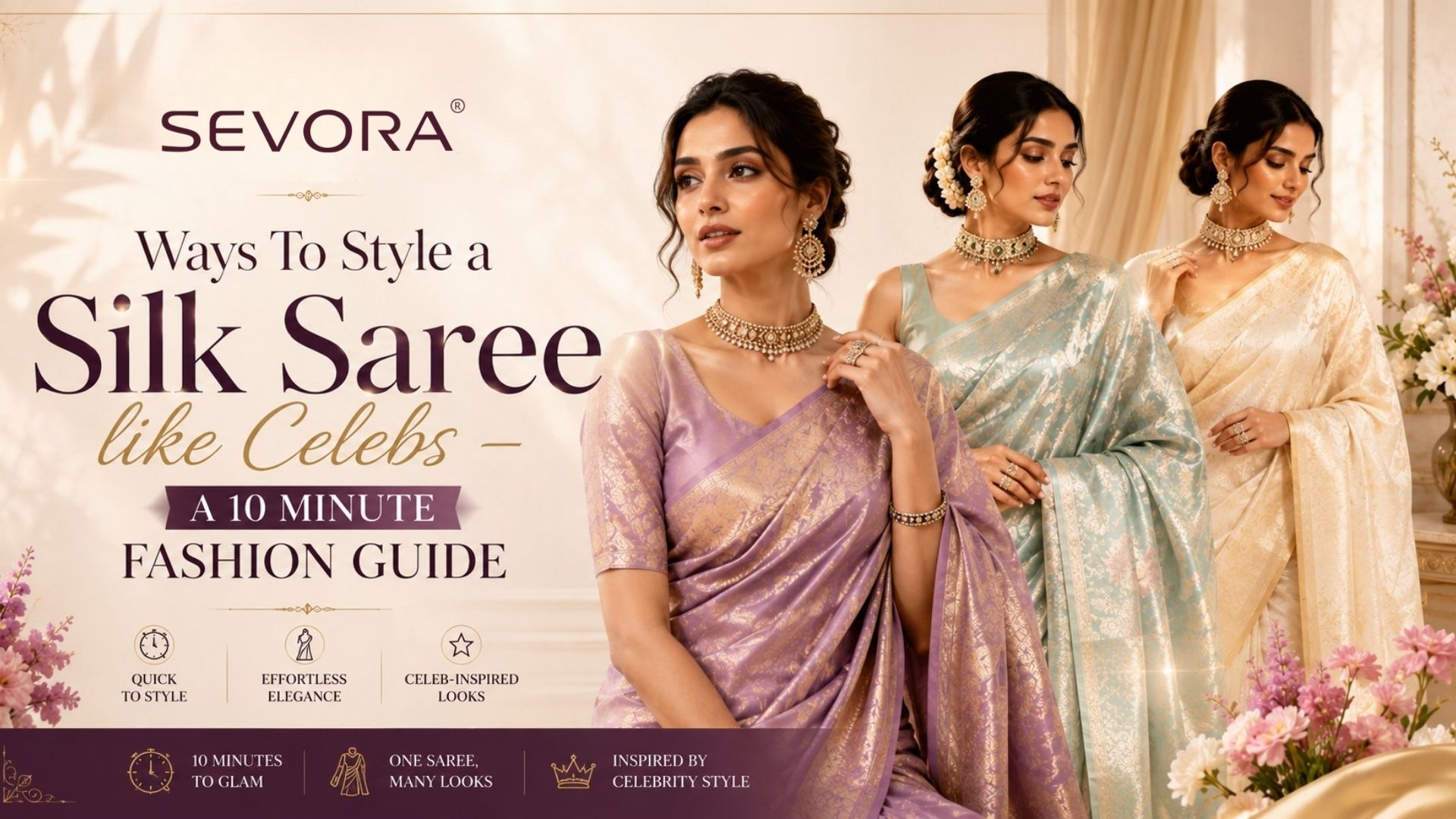
Ways To Style a Silk Saree like Celebs – A 10 Minute Fashion Guide
A silk saree is probably the most loved traditional wear ever crafted in handloom history. They have always been the epitome of luxury, grace, and ageless beauty. However, fashion keeps upgrading itself, and Indian women belong to this generation are always seeking new twists even in traditional saree look. If you’re someone who wants to know how to style a silk saree in modern way, then you’ve come to the right place.
Pure silk sarees are worn and styled in so many different ways for every occasions. Be it morning aartis or corporate events, and more; it’s not the saree but the right way of styling it that makes the difference. This detailed fashion guide by Sevora will explain 10 trendy yet easy saree styling tips on silk fabrics. But, before reaching to that part, there are a few things you must know.
Why are Silk Sarees Hard to Drape Compared to Other Sarees?
The structure of a silk fabric holds an inflexible quality that a much softer fabric doesn’t. Pleats in Silk sarees are quickly visible, and so is the imbalance in draping. If you’re in a rush and pin it in hazard, then a silk saree is not so cooperative with that.
This is the reason why styling silky drapes takes time and right order. Once you catch the structure, the saree will start being friendly with you.
Things You Should Keep Ready Before You Start Draping a Silk Saree
First, you must prepare yourself if you’re running out of time and want to get over with the draping part faster. Right preparation will definitely save you time & energy. So, double-check you’re followed by these points before you begin:
- Make sure the petticoat is tied firmly at your waist.
- Wear your blouse properly and make it adjustable.
- Keep 2 to 3 safety pins ready near your saree.
- Put on your shoes, especially if they are high heels, they affect the saree’s length.
- Take off your accessories as you will need to set them aside during draping.
This makes the process quicker than expected, as you won’t have to search for the essentials in the middle of draping.
10 Ways to Style a Silk Saree That Will Turn Heads
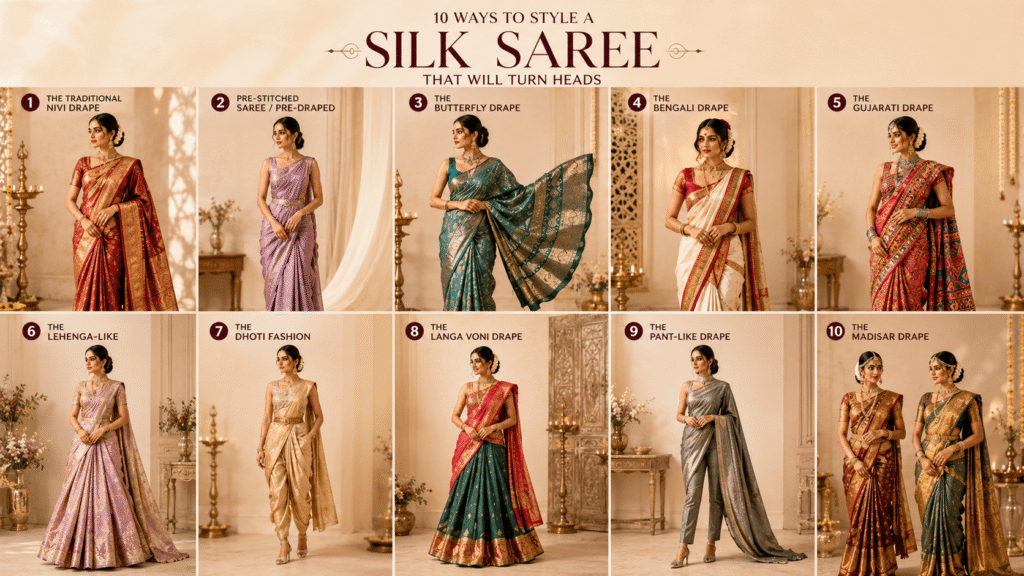
1. The Traditional Nivi Drape
The Nivi drape is the most common and traditional one in sarees. In this drape, the pleats face the front side, and the ‘Pallav’ drapes are placed the left shoulder. The rest of the part sits naturally on the waist area.
Ideal for: Temple rituals, family pujas, festive celebrations, and formal days.
Pair with: Blouses in contrast shades, golden jhumkas and bangles, and fresh gajras.
Silk type for this drape: Mysore Silk, Kanchivaram, Banarasi.
2. Pre-Stitched Sarees /Pre-draped
Get your saree pre-draped by a tailor. It will make the wearing and draping part of a saree as simple as putting on a skirt.
Ideal for: Office events, daily wear, women who don’t know how to wear sarees.
Pair with: Simple blouse and least accessories.
Silk type for this drape: Printed, Semi-crepe, Georgette.
3. The Butterfly Drape
This drape is about bringing the Pallav forward on the right shoulder and spread it like butterfly wings. This way, it showcases the entire design of ‘Pallav’.
Ideal for: Cultural programmes, photo sessions, festivals.
Pair with: Sleeveless blouse or even half-sleeve ones, statement earrings and necklace.
Silk type for this drape: Banarasi and Kanchivaram, where Pallav is heavily embellished.
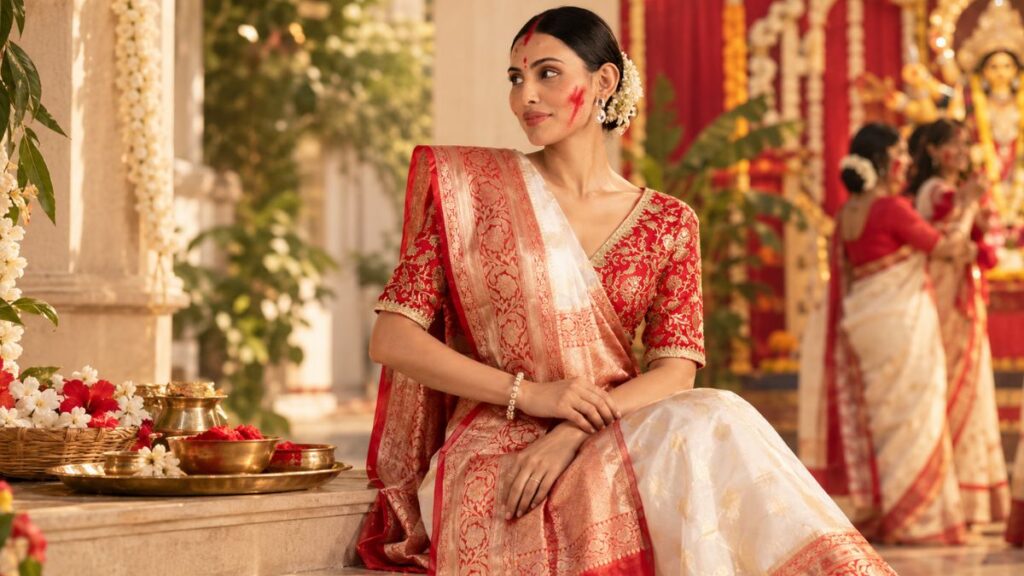
4. The Bengali Drape
A drape without pleats, where your saree will be draped around your body in ‘Pallav’ pattern pulled from the back of your right shoulder. Then, simply pinned. It provides something unique with grace.
Ideal for: Cultural programmes, Durga puja, traditional family get-togethers.
Pair with: Bold red bindi, bangles in red & white a.k.a. shankha-pola, and simple gold ornaments.
Silk type for this drape: Tissue silk, Tussar silk, soft silk.
5. The Gujarati Drape
Again, the Pallav here is pulled from the back and draped on your right shoulder, revealing in the front. This style is meant to have the back more comfortable and dance ready.
Ideal for: Garba nights and Navratri.
Pair with: Maang tika or taira, jewelleries that have mirror work and heavy bangles.
Silk type for this drape: Bandhani, printed, soft silk.
6. The Lehenga-like
Now, this style involves something different. Here, the pleats are tucked at the back instead of the front side. It makes the silk saree look like a lehenga, with a draping more modern. Highly known in silk saree for wedding purpose.
Ideal for: Reception parties, modern weddings, cocktail evenings, grand celebrations.
Pair with: Embroidered blouse or the ones heavily embellished, and necklace.
Silk type for this drape: Organza, tissue, georgette.
7. The Dhoti Fashion
The name justifies with the lower part of the saree done in a dhoti-inspired drape, creating a trouser-like silhouette. Very artistic and upgraded.
Ideal for: Fashion shows, art events, cultural settings.
Pair with: Crop top or contemporary blouse, long earrings.
Silk type for this drape: Chiffon, printed, georgette.
8. The Langa Voni Drape
A traditional style belongs to South India where a lengthy skirt a.k.a. Langa, fitted blouse, and the draping fabric ‘Voni’ are combined. Far unique compared to a full saree drape.
Ideal for: South Indian festivals, young women, teenagers, coming-of-age ceremony.
Pair with: Traditional ornaments, jasmine flowers in hair.
Silk type for this drape: Dupattas of any silk that matches the Langa.
9. The Pant-like Drape
The pant-like drape is called a saree drape done over churidar or a cigarette pant instead of petticoat. The ‘Pallav’ drape takes the shape of a stole here, which is so office-like and new at the same time.
Ideal for: Office meetings, professional events.
Pair with: Fitted pants, minimal silk saree accessories.
Silk type for this drape: Chiffon, printed, lightweight georgette.
10. The Madisar Drape
Madisar drape is done on a bridal silk saree. It’s an old traditional style using a 9-yard saree, famous in Tamil brahmins. It’s not just ceremonial but also deeply rooted in culture. They divided this specific style in two parts.
- One where they wrap the saree around their legs, and the pallu is draped over left shoulder. It’s called ‘Iyer Style’.
- Second, the drape happens on the right shoulder, leaving the left one bare. This fashion is also known as ‘Iyengar style’.
Ideal for: South Indian weddings and pujas, particular ceremonies.
Pair with: Nose rings, bridal jewelleries, jasmine garland.
Silk type for this drape: Mysore, 9-yard Kanchivaram silk saree.
Take a Glimpse of Quick Style Guide Here
| Occasion | Drape Type | Silk Type |
| Temple Rituals | Traditional | Kanchivaram |
| Office or Daily Wear | Pre-draped / Ready to Wear | Georgette or Print |
| Festive Purpose | Butterfly | Banarasi |
| Wedding Celebration | Madisar | 9-yard Kanchivaram |
| Receptions or Parties | Lehenga | Organza or Tissue |
| Cultural Functions | Bengali or in Dhoti Style | Chiffon or Tussar |
Which Footwear Can Join the Styles Above?
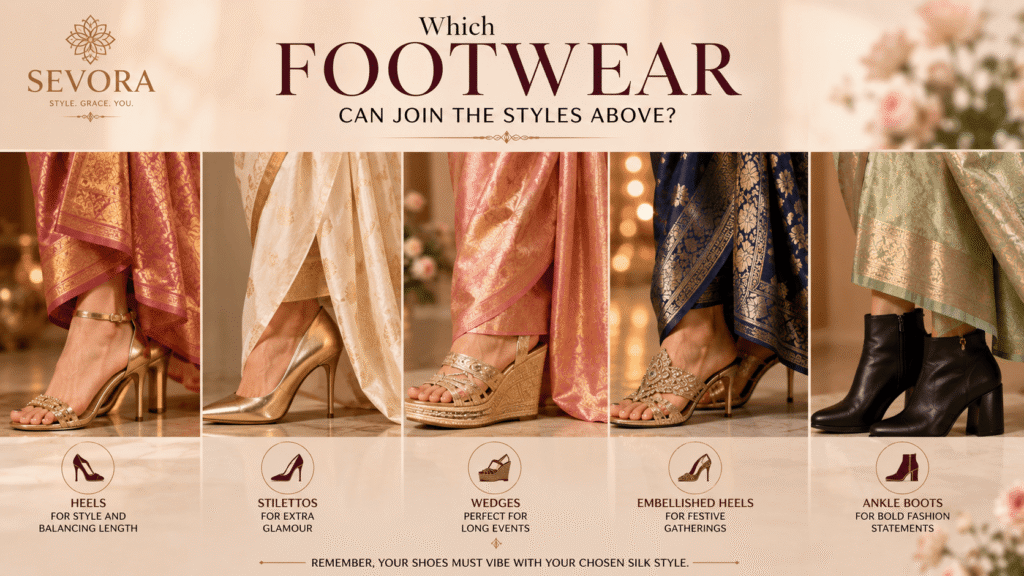
Footwear detail is something most of you overlook. But wrong picks in shoes can affect your whole appearance. Styling the silk sarees new but making traditional sandals permanent? Not acceptable for your silk! Explore these numerous ways:
- Heels for style and balancing the saree’s length.
- Extra glamour requires stilettos.
- Long events? Try wedges.
- Embellished heels if a festive gathering is on the way.
- Bold fashion speaks louder with ankle boots.
Remember, your shoes must vibe with your chosen silk style.
Colour Contrast—The End Game of Modern Silk Approach
To approach silk saree design in modern world apart from draping part, you must play with colour contrasts as much as you can. Mixing odds & evens brings freshness and creativity to your outfit. Don’t try hard to twin your blouse with the saree, welcome unexpected shades instead. For example, go for:
- Bright neon blouses with traditional silk.
- Blouses in pastel with premium silk.
- Printed blouses with simple silk sarees.
You can create more combinations, inspired by these ideas.
Where It all Makes Sense
Even after a successful drape, there’s something that miss out — confidence. without this, your different approach towards a silk saree cannot be completed. Silk sarees are known for carrying natural grace, when you style and wear them with fearless energy, they create a powerful presence in the room.
Have a straight & comfortable walk to slay the look. The key to the best styling in a silk saree for women, is loving their own appearance. It’s all about welcoming a new vision while keeping the elegance same.
FAQs (Frequently Asked Questions)
A. Yes. Avoid the usual petticoats, which add bulk. Wear a shapewear one in Lycra or satin. It flares the saree’s lower part very well.
A. Contrast ones are highly known for the best silk saree blouse design. Use a simple, elbow-length or deep-cut blouses if your saree has heavy embroidery or embellishment. But if the saree is a plain one with minimal borders, then boatnecks or sleeveless designs are preferred.
A. Of course!! If you attach a metallic or traditional waist belt (kamarbandh), it will surely elevate the look, prevent the pallu from leaning to a side, and show off your curves perfectly.
A. Traditional gold jewellery (specifically temple jewellery) is a perfect match for silk fabrics. If it’s a Kanjivaram or Banarasi silk saree, then antique gold or gold-plated jewelleries can complement the Zari work.
A. Drape and tuck the saree too low (at the navel area). Wear comfortable heels, keep the pleats on your waist open at about 5-6 inches, and fold the pallu instead of leaving it open and covering the entire upper part.
Related Articles
Enjoy This Article?
Subscribe to our newsletter for more fashion insights and exclusive content.
Subscribe Now