
Is That Really Viscose? Let’s Check
Viscose Rayon has a benchmark in textile industry, for a very long time. Its silky drape, excellent dying property, and affordability, has the fashion designers fallen for it. Viscose fabric connects luxury with availability. But as the demand for sustainable materials is growing day by day, viscose keeps coming to questions by today’s style icons.
This blog reflects light specifically on the origin, properties, benefits, and weakness of viscose fabric. Wait, there’s more! It also explains how it makes its space in textile sourcing.
What is Viscose Fabric All About?
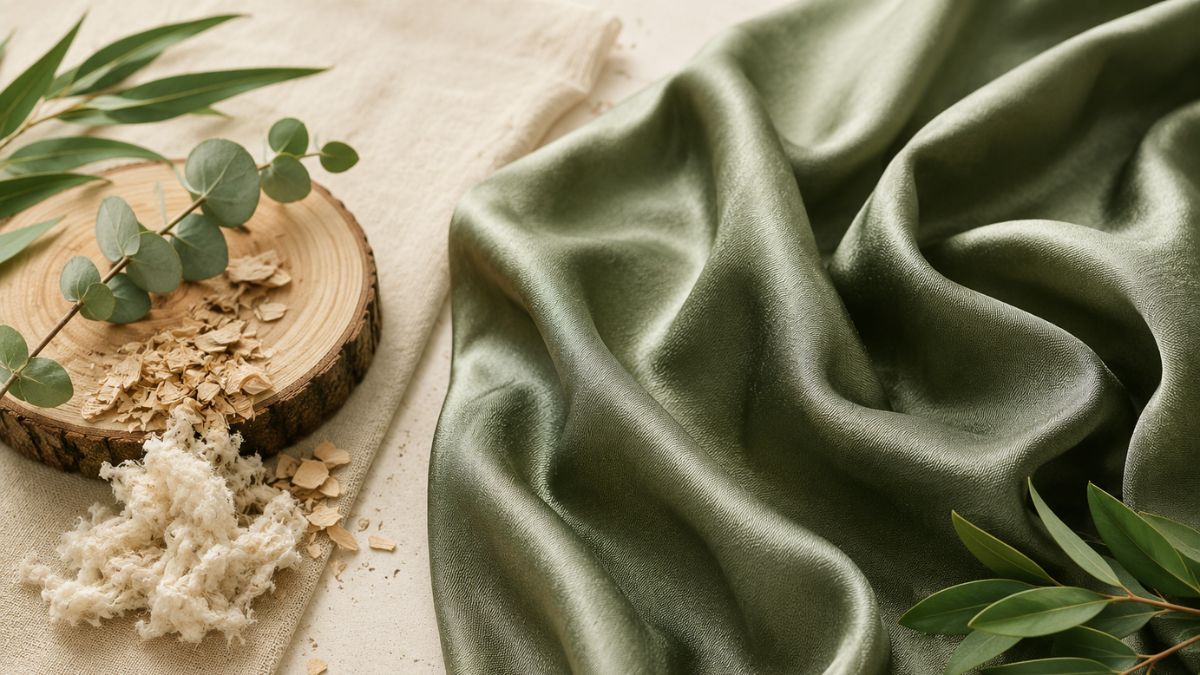
Viscose, a.k.a. rayon, is a semi-synthetic fibre. It’s made of plant-based cellulose, which is usually extracted from eucalyptus, bamboo, pine, or beech trees. While wood pulp is the origin, chemical interventions dissolve the material into a thick and viscous solution before it’s spun into fibres.
The fabric is actually an alternative for budget-friendly silk, coming from 19th century. It offers the exact sheen and drape silk fabric features, but in a much cheaper price.
Origin & Composition
- Plant-based cellulose, generally extracted from wood pulp.
- Processed chemically, which involves sodium hydroxide and carbon disulfide.
- A fabric spun by such soft, breathable, and smooth fibres.
- There are three types of viscose exists: Standard viscose, modal, and lyocell. Modal is stronger one among these, while lyocell is eco-friendly.
Though viscose comes from the same “regenerated cellulose” family as Tencel and Modal, standard ones hold a strong presence on eco-system until it’s created using a clean and closed-loop technique.
Benefits of This Fabric
- It feels similarly soft and silk like cotton and silk materials; which is beneficial for clothes with drapes.
- Very breathable, more than polyester or nylon ever can.
- Being highly absorbent, it’s favourite to summer season, sportswear, and lots.
- Viscose holds onto both vibrant and even colours, as the fabric is very convincing to dye.
- Viscose is a budget-friendly option. It is easily affordable as a premium fabric substitute.
Special Features It Has
- Well, let’s start off by saying, it has fluid drape that flows effortlessly; which is why the fabric is best for dresses, blouses, and scarves.
- The surface of this fabric takes on print work such as block prints, screen prints, and dyes well.
- Weaves similar to silk, cotton, wool, or linen’s, are applied on it.
- Lightweight & posh at the same time, which refers to its availability on both fast fashion and conscious couture.
- Colour retention is one of the highlighted benefits of viscose. It not only absorbs dyes but also blooms in vibrant shades.
- Viscose is blended with cotton, polyester, and spandex. It lets the designers experiment with fabric’s properties and better its stretching quality or durability.
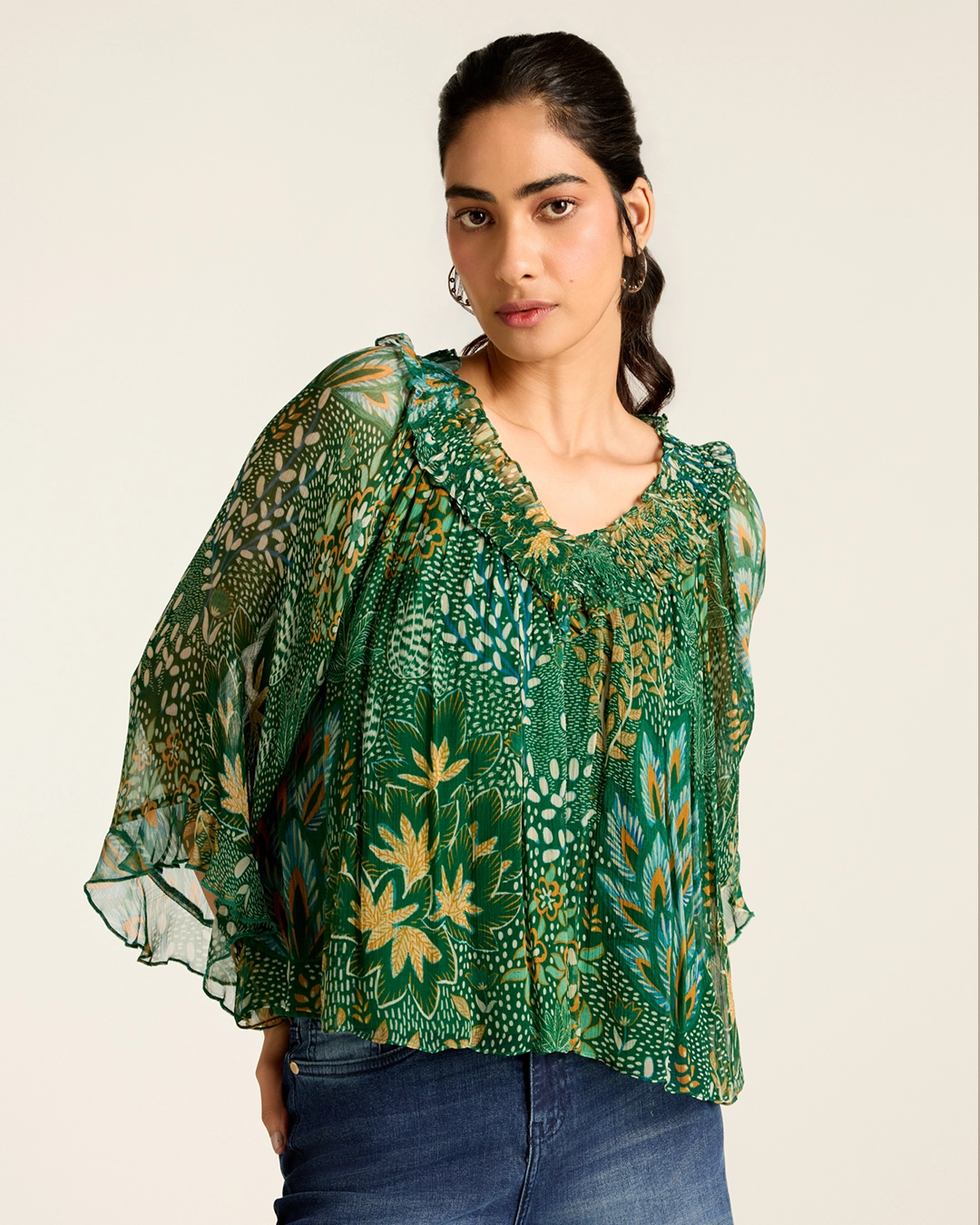
Label Ritu Kumar
Green Angelique Short Top
₹4,900.00
The Green Angelique Short Top centres on effortless femininity. Cut from viscose chiffon in a botanic print, with full sleeves, this top is styled for easy, considered dressing. An easy, versatile reach for everyday dressing, weekends, and city outings.
Shop Now.webp)
Aarke Ritu Kumar
Green Izmir Kurta
₹2,500.00
Viscose in green in a geometric print — this kurti brings casual festive ease to easy dressing. The three-quarter sleeves silhouette, it is vibrant and effortlessly wearable. Style it with silver hoops and flats for casual gatherings or a relaxed…
Shop Now.webp)
Aarke Ritu Kumar
Green Pepper Solid Co-Ord Set
₹4,500.00
For easy days that deserve a considered look — this vibrant green co-ord set in viscose in a floral print. Complete with a matching pants, it keeps the look effortlessly complete. Style it with statement earrings and juttis for easy…
Shop NowIs Viscose Sustainable? — A Debate on Eco Consciousness
The sustainability of viscose is dependent on its production. Manufacturing of the traditional one includes chemical interference, connects to deforestation, and invites water pollution.
However, this isn’t the same case for eco-friendly viscose. The formula is different there:
- Lyocell and Tencel recycle 99% of chemicals.
- With FSC certification, raw materials are the source.
- Also, OEKO-TEX or GOTS certified for a secure processing.
How is This Fabric Taken Care of?
While being versatile, viscose fabric asks for deep attention; in order to preserve its beauty and longevity.
- It needs to be handled gently, especially when the fabric is wet. Viscose is weak when it encounters water. Washing it gently with hands or in washing machine applying cold water is recommended.
- Avoid harsh treatments as much as possible. To prevent any stretch or damage, strictly skip wringing or twisting.
- If you let it dry in air, it will not shrink which usually happens due to machine dry.
- Ironing the fabric in low temperature setting, brings back its shape and smoothness. But it should be done when the fabric is still damp.
- It is safe to give it for professional dry cleaning if the outfit of this fabric is delicate and features intricate designs.
Is It Better with Spring-Summer or Autumn-Winter?
Viscose is an inspiration to Spring and Summer collections for being lightweighted, airy, and moisture-absorbent.
- Breathability lets air circulate and keep the body cool in hottest days.
- Drapes in this fabric are meant for flowy moments. Be it dresses, blouses, or resort wear.
- It absorbs sweat or any liquid right away, without feeling sticky which makes it a common pick to survive humid climates.
Yes, they’re used in Autumn Winter as well because-
- Viscose is suitable for linings, long-sleeved tops, and blended fabrics in fall.
- Having several blends with wool, silk, or cotton; viscose is able to provide softness and sheen in thick winter wear.
Downside of Traditional Viscose
- The production of viscose is chemically processed with carbon disulfide which not only affects the health of workers but also the environment, if mismanaged. The process takes intensive energy and water usage as well.
- The wood pulp used for viscose may directly intersect with irresponsible logging. Traditional ones can inadvertently support deforestation, which eventually displaces wildlife and destroys forest ecosystem.
FAQs (Frequently Asked Questions)
Q. Is viscose fabric natural or synthetic?
A. It’s semi-synthetic. Though it’s originated by natural cellulose, the fibre-turning process involves chemical. So, you can say it is categorized in the middle of natural and synthetic.
Q. Can other fabrics blend in viscose?
A. Of course! Viscose mixes very well with cotton, linen, silk, and wool to offer better softness, drape, and dye absorption to its outfits.
Q. Can viscose be handwoven like khadi or linen?
A. While viscose is a machine-spun fabric, it can be handwoven in blended forms.
Q. Can viscose fabric survive hot climate?
A. Yes, viscose is highly breathable, lightweight, and moisture-absorbent, making it a popular choice to survive warm weather.
Q. Do viscose fabrics shrink with wash?
A. Yes, viscose easily shrinks when it’s exposed to heat or harsh washing cycles. It is best if you give it a gentle wash it with hands, in cold water. If you’re more of a machine washer, then set it in light washing motion and air dry it to keep the clothes in shape.
Bonisha Chatterjee
Bonhisha Chatterjee is a content writer with over 7 years of experience in digital media and storytelling. She has written extensively on entertainment and fashion; covering celebrity trends, style, lifestyle, and pop culture. Known for her versatile writing style and keen eye for detail, Bonhisha creates content that is both informative and reader-friendly. Her work reflects a strong understanding of digital audiences and evolving content trends.
More articles by Bonisha ChatterjeeRelated Articles
Enjoy This Article?
Subscribe to our newsletter for more fashion insights and exclusive content.
Subscribe Now